Category Archives: knowledge

It’s a new year -let’s summarize the old one

2015 was a strange and pivotal year.

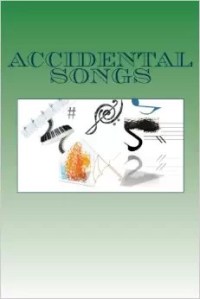
Early this year, I was unemployed, job searching, writing, baking, painting, and cooking. I worked on a chapter book of poems that I self-published on Amazon (Accidental Songs). It was a challenge, and I’ve still got a lot to learn. I hope to do another one soon.

In the spring, I became employed!  So I wrote less, baked and cooked less, had nothing to paint (all rooms were done). I planted tomatoes and a single pepper plant.  All did remarkably well!  Lots of pasta sauce and salsa during the summer!

I still managed to finish NaPoWriMo, then probably averaged about a post a week on my blog.  In retrospect, I delved a lot more into rhyme and meter this year than in the past.  I gained some new followers, some real, some not … ;).  Thanks to all who discovered and followed my blog in 2015.

In the summer, my eldest son got married!  Beautiful wedding. Wonderful time.  Great daughter-in-law!  Then they moved all the way across the country… 😦

Then the rest of the year just flew by…

Things I would like to do as a writer(and not a writer) in 2016:

  1. Personally meet more blogging acquaintances.  Something difficult to manage, given the global nature of the medium.  But, we are human, and humans need social interaction.  I’ve never personally met a single blogging-“friend”…
  2. Submit more poems for print publication – I’ve tried this, and was sorely disappointed.  But, I believe this is a valid goal for any writer. So I keep trying.
  3. Do another chapter book.  I enjoyed the process.  In the future, I would like to try a collaboration with another writer or illustrator.  How has this worked out for anybody?
  4. Attend/participate in a writing workshop.  I did this in 2014, and really enjoyed it, but missed the one that was local this year – it wasn’t as well advertised – and I didn’t see the notice until too late.  Anyone have any good/bad experiences with this they would like to share?
  5. See more baseball stadiums (I didn’t get to a single new park this year).
  6. Walk more, eat less, control my blood sugar better, be more attuned to people – be a better human being.

And that concludes 2015.  I wish you all a safe and happy New Year.

John


an extant poem

Could you pass upon a poem
with this, the textured symmetry
of drooping tulips in the mist
or waves crashed in, that fan -set free?

A yellow bird, that comes to rest
inside a cage of brass and wire,
to let it come and go seems fit
a spark, a stir, a thought inspired.

A red bench in a sea of gold.
A row of rocks, precise and small.
Traipsing steps, a reflection seen
leaving tracks in waterfalls.

A living, breathing cache that blooms
with meadowsweet and lace and phlox –
the heather in the garden
where the blue gate never locks.

An angled grain in wood or wings
of butterflies, with flecks that scroll,
could you catch and hold this poem
inside, and bind it to your soul?

Poet in Mind: Something about Blue Mountain

It has been over a year since I wrote something in this series. I had been thinking recently about poets and their writing process, and I was looking for writing that focused on southern ideals and influences- from an out-of-the limelight source. I decided to focus on post-civil war era writers in the south. Researching that idea lead me to an interesting story that isn’t necessarily just about poetry, but I can’t help but think it influenced poetry a great deal.

Mark Perrin Lowrey (1828-1885) served in the confederate army during the civil war, reaching the rank of Brigadier General. He was often referred to as the “preacher general” because of his background as a baptist preacher. Originally from Tennessee, he and his wife Sarah Holmes had settled in rural northeast Mississippi before the war. He returned after the war was over, and recognized the need for educational opportunities for women in the South. In 1873, he established the Blue Mountain Female Institute, later called Blue Mountain College, in Blue Mountain, Mississippi (near Tupelo).

Mark and Sarah Lowrey had eleven children. Among them, born April 2, 1860, named Mark Booth Lowrey (1860-1930) and his twin brother Perrin Holmes Lowrey. Both of the boys grew to have distinguished public careers. Perrin became a lawyer and judge in Mississippi and Booth became a well-known public speaker/essayist/satirist/humorist in his day. Both at times were faculty members at the Blue Mountain school.

Mark Booth Lowrey’s writing was well-regarded and he was a sought lecturer/speaker and professor of “expression” at the Blue Mountain Institute. Among Booth Lowrey’s canon of poetry is a collection of folk poetry, written in “Negro dialect” in the vein of Uncle Remus or Mark Twain, which was a popular form around the the turn of the century. It is an interesting style and raises thoughtful questions. It is worthy of its own discussion, but not here. Instead, I chose the following poem, a delightful song of admiration.

The Red-Haired Girl
by Mark Booth Lowrey

You may sing your song to the queenly grace
Of the raven-haired brunette,
To the faithful soul of the blue-eyed blonde
With her pose of a statuette;
You may pine and die over hazel eyes,
You may rave o’er the chestnut curl,
But for all the charms of the world combined,

Just give me a red-haired girl.

The eyes of jet and the raven locks
Are a source of rare delight,
And the moonbeam curls of the meek-eyed blonde
Are a soul-bewitching sight;
But the peach-like cheeks and the rosy lips
And the teeth of chiseled pearl,
Are the outward sparks of an inward light,

The soul of the red-haired girl.

Her cheeks are fresh as the blushing rose
That blooms in the joyous spring;
Her eyes are bright as the summer’s beams
That dance on the blue-bird’s wing;
Her hair is like to the autumn leaves
That glisten, and dance, and whirl;
And the seasons, all but the winter’s chill,

Are found in the red-haired girl.

The blush of spring, and the summer’s calm,
And the autumn’s sober truth,
The placid candor of sweet old age
And the fire of ardent youth,
O, Nature’s casket of rarest gems,
Of rubies and gold and pearl,
Of diamonds, onyx and evening stars,

O, royal, red-haired girl!
*******************************
Booth’s grandson, also named Perrin Holmes Lowrey (P.H. Lowrey)(1923-1965), also became a poet. He frequently published short stories and poems in his earlier years, but later shunned the life of a writer. Some of his poems reflect his time serving in the Navy during WWII. In Song of the Flag, P.H. Lowrey conveys a strong patriotism with imagery and word choices.

Song of the Flag
by Perrin Holmes Lowrey

OH, sing we the song of the flag,

Of the banner that billows and beats
As it rips through the wind on the roofs of the towns
And whips at the top of the fleets.
It tears through the rage of the blast,

In a fury it tugs to be free,
As it swings in the teeth of the storms of the land
And sings in the gales of the sea.

It runs in the winds of the plains,
It steadies and stiffens and thrills,
It streams in the smoke of the scattering clouds,
And gleams on the bayonet hills.

Oh, sing we a song of the flag,

As it bellies and flutters and flings,
As it leaps to a home in the arms of the air,
And laughs at the lusts of the kings.

It flames with the red of the dawn,
And the white of the breakers that race;
It burns with a beacon of wonderful stars
On a banner of infinite space
******************************

Another member of the faculty of Blue Mountain College, David E. Guyton (1880-1964), was a professor of history…and a poet. He was blind since the age of 11.

Triolets
by David E. Guyton

WHILE thou art near,
As now thou art,
I feel no fear,
While thou art near,
That others, Dear,
May win thy heart,
While thou art near,
As now thou art.

When thou art far,
As thou shalt be,
No jealous jar,
When thou art far,
Shall ever mar
My faith in thee,
When thou art far,
As thou shalt be.

Till saints deceive
And truth is trite,
Sweet Genevieve,
Till saints deceive,
I shall believe
And trust thee quite,
Till saints deceive
And truth is trite.

***********************
Muna Lee (1895-1965) was born in Mississippi, but moved to Oklahoma at an early age. She returned to study at Blue Mountain College in 1909, and was encouraged to write by David Guyton. After one year, she returned to Oklahoma and studied at the University of Oklahoma, followed by a return to Mississippi, ultimately graduating from the University of Mississippi in 1913. Early in her career, she was a school teacher, and wrote poems. As she felt the need to contribute more, she taught herself spanish and applied and was hired to be a translator for the US Secret Service during WWI. It was during this time that she became enamoured with latin american culture, and translated a large number spanish language poems. She had a long brilliant career in civil service, as a writer of fiction and poetry, and held an interest in Pan-american affairs in Puerto Rico, where she made her home in 1920. Much of her personal poetry seemed to focus on personal heartbreak-love lost-but was infused with imagery of beauty that filled the void.

The Unforgotten
By Muna Lee

I can forget so much at will:
That first walk in the snow,
The violet bed by the April rill,
The song we both loved so;

Even the rapture of Love’s perfect hour.
Even the anguish of Love’s disdain —
But never, but never, the little white flower
We found one day in the rain.

A Song of Happiness
By Muna Lee

From “Songs of Many Moods”

SO many folk are happy folk—
The feathered folk and furred!
And many a kindly glance I’ve had
And many a brisk bright word
From squirrel and from gray fieldmouse,
From cardinal and blackbird.

It’s only folk within the wood
Can know my happiness.
I did not tell my secret, but
I heard the robins guess;
The golden minnow knows it
Beneath the water-cress.

**********************************
Poetry often originates in quietest of places and is capable of reaching the farthest points. Each of these poets passed through a sleepy town with a small college in rural Mississippi. There are many such places I’m sure. Much of their poetry was published in small periodicals, something that is done much less these days.

And finding those gems, unknown before, is like finding “the little white flower in the rain.”

**********************************

1. The Mississippi Poets, Ernestine Clayton Deavours, 1922, E. H. Clarke & Brothers, Memphis, TN.
2. The Lives of Mississippi Authors, 1817-1967, James B. LLoyd, ed. 1981, University Press of Mississippi.
3. A Pan-American Life: Selected Poetry and Prose of Muna Lee, Edited and with biography by Jonathan Cohen, Foreword by Aurora Levins Morales, University of Wisconsin Press, 2004
persistence

I have a confession.

I like jello.

It’s simple consistency and the ability to hold different flavors makes it the perfect dessert. Strawberry, lemon, cherry…lime is my favorite -by far. Green jello. It is easy to make: Just add warm water, mix, and let it set. It can be served up in little dessert cups, in larger pans and then cut into slabs or cubes. This delicacy is unique. It holds form. You can depend on it…mostly…to be the same every time you make it, only becoming distasteful when it is stale.

I recognize that this love for jello goes back to my childhood. During my hospital stays for various surgeries, the food was never a favorite – it was not consistent – nor was it the easiest to eat at the time. I don’t really remember the meals, but I remember the jello. Cool and soft, flavored, and easy to eat.

It is also versatile. You can mix it with other things to contribute that flavor. Mix with whipped white topping giving a fluffy fruit flavoring. Or mixed with fruit itself. Or as shots with liqueur. I’m not as much of a fan of jello salads, perhaps I feel the other ingredients overwhelm the flavor in the jello itself…which is funny, because gelatin is really only a medium to hold things together. The fact that jello is flavored is a bonus, I suppose.

I seem to appreciate that bonus, so I don’t really care for the desserts that “contain” jello.

When we eat at our favorite chinese buffet restaurant (the one that plays smooth jazz), I always check out the jello dessert on the salad table. My son looks at me with doubt, and says “You know you are always disappointed that the jello is stale.” This is true. Jello that is “old” develops that toughened layer on top where it has dried out over time. This ruins the trifecta of form, flavor, and texture. Nine times out of ten, I am disappointed. But I keep trying the jello. I’m persistent like that.

They don’t serve lime-flavored, though.

lime jello
************************
I recognize that my use of the term ‘jello’ may be implying that I endorse a particular product of gelatin dessert. Jello has become such a ubiquitous product that it’s identification is similar to kleenex ~tissue, coke~carbonated beverage, etc.

Popcorn thoughts of kindness

I’ve been doing a bunch of bits and pieces of things over the past week, I feel very scattered. I haven’t really had time to sit down and write much. This is OK. Life happens. I do have a lot on my mind these days.

I had some blogworthy tidbits I wanted to jot down, but they were not worthy of single posts…kind of like kernels of popcorn that presented themselves.

National Poetry Writing Month is just around the corner. I last participated in 2013 (I think). I proudly completed the entire month for the first time. Well, I’m committing to do it again in 2015. It’s a good way to stretch your poetry legs, gets some things written down, try new forms, and shake out the dust. If you are a poet, and are participating, let me know. So we’ll see how this goes.

A reminder, my very first chapter book Accidental Songs is available on Amazon. I self-published this collection. I invite you to check it out, purchase it 🙂

Spring is getting its claws in the seasonal change, judging from the number of robins that I’ve seen recently, the rapid changes in weather that are apparent, and my allergies ramping up. I’m looking forward to the green landscape though.

I happened to read this quote in my twitter feed this week,

“We’re all smart, distinguish yourself by being kind.”

This was posted in a twitter account entitled “ShitAcademicsSay”. I don’t know the origin of the quote, and have been looking for it’s primary source. The original context apparently has to do with academic publishing and review, but I see it as a more universal restatement of the golden rule. I like it.

I heard Nat King Cole’s version of Smile a few weeks ago. The music by Charlie Chaplin, John Turner and Geoffrey Parsons added the lyrics and title in 1954. It was a mantra for a few days in the bleakness of winter. I love how a verse, a song, a quote, or even a picture can present a moment of beauty and relief.

That’s it. Popcorn’s done.

A Study in Charlotte -3 Cinquains

Charlotte,
prickling leaves while
her reclining posture
whispers an invitation, told
of truth.

The wind
awaits her voice
that mocks despair, her tree
ruffles yet remains quiet, and
steadfast.

Damsel,
in blue gingham
by angel’s wings she sings –
broken, igniting fierceness,
she mends.

***********

Some observations about this poem. I’ve never personally known or physically met anyone named Charlotte. I follow a couple of blogs and have read several other blogs this week written by women named Charlotte. It’s coincidental, yet fascinating to me that so many Charlottes present their writing on blogs that I should read in one week. I love the sounds the name makes. It’s a name made to be whispered.

And here we go….

For a few months now, I’ve been been collecting and reviewing, editing and reviewing, fretting and stewing, anxiously awaiting reviewing. I’ve been putting together my first collection of poetry. It is a chapter book that is my first attempt at widespread publication, entitled Accidental Songs.

It was both exhilarating and frustrating. The selection process for poems in a collection lays bare all the insecurities that I had in writing them in the first place. I believe that some of them are great poems, some of them are not that great. Some had to be cut altogether, others were recut and reformed into something that fit the overall idea for the collection. But as the sum of the whole, I think they all contribute something to the collection, and that was what I wanted.

I want to thank Sarah Wesson and Sherry O’keefe for their time and valuable comments during the manuscript review.

And I want to thank my wife for being the incredible supportive spouse she is. Thanks babe.

Of course, I invite you to visit Amazon.com and have a look for yourself. I’m proud that I could accomplish this effort. If you should choose to purchase a copy, Thanks!

Accidental Songs
Accidental Songs

Incongruence, or How to Make a Salad

It was Friday.

A cold snowy day. My wife was home from work, sick with a cold and I was the dutiful caregiver – supplying her with ice cold drinks and extra blankets.

We decided that we wanted salads for lunch. My wife’s favorite salad is a Sante Fe style salad, with chicken, lots of crunchy tortilla strips and usually ranch dressing.

Luckily, I had cooked half of a package of chicken tenders two nights before (when I made a chicken pot pie), but seasoned with a homemade taco seasoning – comprised of chili powder, garlic powder, onion powder, salt, black pepper, red pepper and cumin. These days, I am intrigued by the opportunity to play with the spices we have in our cabinet. Sure, it is more difficult than just using a packaged taco seasoning, but it appeals to the scientist in me.

Anyway, I had cooked those chicken tenders on Wednesday night. They were looking for something useful to do. I cut them into small chunks, and set them aside.

I pulled out a bag of Romaine lettuce. Now, you may ask, why didn’t you use a whole head of lettuce? Fewer things in the kitchen bore me more than chopping and cleaning a head of lettuce. This is interesting, because I will prep and cut onion, peppers, tomatoes, squash, cucumber…even carrots, just about any vegetable. Lettuce bores me.

I poured the precut salad mix into a bowl and inspected it for undesirable components, rinsed it, and moved on. I chopped two Roma tomatoes (see comment above) and added to the lettuce. I grabbed a handful of grated monterey jack/cheddar cheese – this is about a cup – and mixed it into the salad bowl. Finally, I tossed in another handful-and-a-half of tortilla strips.

For the dressing, I mixed 2 parts of Country French with 1 part Chipotle Ranch and stirred. This gives the “right” combination of sweet and spicy. Flavor chemistry is an interesting subject. The Country French sweetness is detected by a combination of receptor proteins in the roof of the mouth and the back of the tongue. These receptors synapse with the glossopharyngeal nerve and the chorda tympani, which means the signals are transferred up the center of the neck as well as along the sides of the skull, through the inner ear.

Spicy flavors, on the other hand, are detected by the VR1 receptors in the mouth. What is interesting is that they are designed to detect heat, such that we don’t consume hot food that will burn our mouths. The detection of capsaicin (the chemical in most peppers) is accidental, but activates the “heat” response of the VR1 receptors.

I poured the dressing over the salad mixture and tossed liberally to coat the lettuce, cheese, tortilla strips and tomatoes. At this point, I heated the chicken in the microwave for about 90 seconds.

To serve, I scooped out a serving (or two) of the salad mixture onto a plate, then topped it with the warm taco chicken. What you get is a delicious, yet incongruous, mixture of ingredients.

Crunchy, yet smooth
sweet, yet spicy
vegetable, yet chicken-y
warm, and cold

Serves 3 to 4 people, was eaten by 2.

So, in summary:

5 or 6 chicken breast tenders, cooked with taco seasoning or similar spices, then chopped
1 bag Romaine Salad
2 Roma tomatoes, chopped
1 Cup Monterey Jack/Cheddar grated cheese
1 1/2 cup thin tortilla strips
2/3 cup Country French Dressing
1/3 cup Chipotle Ranch Dressing

Soundtrack for making the salad:
Ramblin’ Man – The Allman Brothers Band
Smile – Nat King Cole

Climb the mountain

So by now, (if you enjoy pop culture events) you either watched Lady Gaga’s performance at the Academy Awards live or caught up with it on the internet. If you haven’t yet, I encourage you to go find a link and listen.

I am not necessarily surprised by the talent she displayed in performing selections from The Sound of Music. I knew she was super-talented. I’m not a big fan of her pop persona, though I recognize her talent and abilities as being among the leaders in her industry. No, what amazed me was the solid…Solid….versatility she displayed in performing not only the Julie Andrews part of the catalogue with sensitivity and confidence, but also Climb Every Mountain … which is written for a dramatic soprano and requires different vocal skills and range.

She nailed it.

If you watch her facial expressions during her (well-deserved) standing ovation, there is a flash of disbelief on her face. It is almost as if she couldn’t believe that she had done that.

The question that popped in my head after watching that was, “Why the schtick?”

With all that talent, and considerable versatility, she has ability beyond what most of the viewing audience realized. So why did she/does she cling to this pop persona of hers? Or better yet, why did she develop it in the first place?

The answer to that is frighteningly simple…image sells.

In the entertainment industry, there is no shortage of talent, pretty faces, and even versatility. If you want to set yourself apart, you need to create an image that people will remember. History shows this again and again. The Beatles clean cut business suit image, fashioned by Brian Epstein, was designed to appeal to older record executives and wary parents who thought Rock & Roll was a passing fad. The KISS make-up and rock image was designed to give people a visual memory of a heavy metal band when there were a lot of other bands around. Madonna’s image seemed to be fashioned to keep people talking about the entertainment – when (albeit early in her career) her singing skills were limited. It seems as if Gaga’s flamboyant stage presence was designed to keep people talking – as if her talents wouldn’t be good enough to be remembered on their own.

I think she just blew that out of the water. It will be interesting to see how she moves forward and if she simply lets her talent and ability do the entertaining.

If there is a takeaway from this, it is to never underestimate your abilities. Always keep yourself grounded in something you do well and love doing. If you keep working and applying your skills to the things that you love most, there will come a moment, a pinnacle where you perform to your very best. At that moment, you will break through into something you never anticipated… and a manufactured image is rendered irrelevant.

Passion for what you do is the best marketing strategy.