I sat down to write and assess a poem of great
inspiration and importance, and when I stopped
I counted all the syllables and found that most
or twelve of them were simple prepositions or
articles, and I relied upon them to string
together phrases, much like threading popcorn or
construction paper chains, and putting a green one
in every twelfth link (so I know how many there
are); this could apply to knitted scarves that could go
on and on and on forever. But then how could
someone even use a scarf that was twenty-four
miles long (a distance that’s really arbitrary).
Continuing, I found myself too obsessed with
the structure and detail of it, (the poem) lacking
any sense of pull with the “normal” sentiments that
inspire: sun, moon, stars, ponds, anyone and no one,
love and death on diverging roads, alas music
not even present and accounted for in this
catenation. Such admiration I hold for
them who check and recheck the number of items
from sun up to sun round in continued amounts,
like counting the grains of sand at the oceanside,
which seems different on each day, but really not,
and you wonder if anyone would notice thirteen.
*********************
This was an experiment in both stream-of-consciousness and attempting to maintain a structural theme of sorts. Also, just some blathering…Creativity should be nutured. Incidentally, I looked up at one point while typing, and WordPress had saved an interim version at 12:12 PM…Oh to have finished this at that point. Thanks for reading.
when you love her,
and practice different words
between the silences,
ascending in chromatic notes
to tempt her fortress
until the muscles betray the bones.
yet, lamps smother their song
and I hear a mandolin
when she says,
“it’s too soon for another forever,”
words that are too soon splayed
for another poem.
I thought it would be funuseful cathartic to summarize a collection of thoughts/experiences that occupied my brain the last couple of days.
What I’m thinking –
My wife and I listen to entertainment/talk show radio on our commute to and from work. We get a dose of top 40 music and sophomoric humor in the morning, and sports talk radio in the evening. I was actually paying attention to music one morning, when I heard Katy Perry’s Dark Horse featuring rapper Juicy J…specifically this lyrical gem in the rap section:
She’s a beast
I call her Karma (come back)
She eats your heart out
Like Jeffrey Dahmer (woo)
Really?
Now….I am, admittedly, not a big fan of rap, though I understand the phenomenon and the urban appeal. It is a form of poetry(rhyming, meter, metaphors, alliteration, etc). I admire certain artists’ ability in rap…both in writing and performing (eminem comes immediately to mind).
But, not only is this example in poor taste…it is just lazy writing. To trivialize a serial murderer in a song lyric about addictive love/lust…surely someone could have come up with something better than that. I’m not a lyricist, and I don’t make a living as a recording artist, but I hope that we as a society don’t reach the callous point of integrating our worst examples of humanity into pop culture throwaway lines…like that.
************************************ What I’m reading –
I think I’ve mentioned that I’m a slow book finisher, and I tend to have several books going at once (probably around 5 right now, at last count). Most recently, I just started Robert Edsel’s The Monuments Men , in anticipation of the movie that going to be released soon. That one has me intrigued, particularly because the book is very factual and dry at this point, like a history lesson. It certainly has the makings of a great war time adventure story, and I will finish it. Incidentally, the last two books I finished were Graham Moore’s The Sherlockian and Dan Brown’s Inferno, both of which I finished within a couple of weeks of each other last summer/fall, which is some kind of record for me.
**************************************** Things that I’m writing
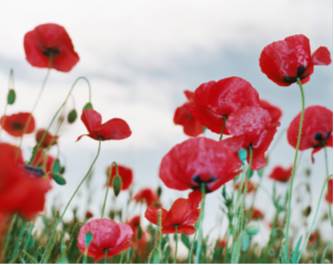
I’m writing alot these days for work: technical reports of various thus and so. I enjoy putting together different ways to discuss trends in data, make predictions, and discuss what observations/results mean or extrapolate to other conditions. It is not surprising then, that for poetry, my inspiration comes mostly from observation. My most recent poem vignette is the result of me staring at a picture on my wall (of twirled poppies) that is located next to a window (where, conveniently this time of year, I can see winter/snow). The symbolism in this poem is not lost on me, as poppies symbolize sleep, peace, or death; these are beautiful and yet, being stuck in a frame, they appear to twist and strain to see the bitter cold and and peace of snowfall.
*************************************** Things that I wonder about
I like statistics and trend relationships. The stats functions here on WordPress tell me something about my readership.
1. Someone in India really likes my poem, Respite, I get a hit from India every couple of days. Whoever you are, thank you for visiting…let me know what you like about the poem.
2. I don’t get many visitors for non-poetry posts. But, I will continue to write things as I feel inspired to.
3. NanoWriMo 2013 really boosted my readership, coinciding with Freshly Pressed, but I don’t think many of them returned after last April/May.
4. I get the highest hit rate when I write romantic or stylistic Romantic poetry. My take is that people like poetry that makes them feel good. But, still, I get very few actual comments (I’ll harp on that some more).
Thanks for visiting. And if you happen to write song lyrics, insist on better metaphors.
the poppy, twirled behind the pane,
opening it’s petals, within a frame
ponders snowfall, ne’er the rain.
how silently, it’s whispers call
and wander, ’til flecks end their fall
and red begins to bow and wane
like vignettes, sacred and profane.
A cappella music (without instrumental accompaniment) is particularly enjoyable for me to listen to. As a poet (and an avocational musician), I am drawn to the similarities that poems and a cappella music have. Lyrical phrasing, meter, rhyming, and onomatopoeia mean so much to a cappella music, because it relies so heavily on the human vocal element.
**********************************
So…winter is in full force, all wound up, blustery, snowy, icy, and *cold*.
A blogging friend posted Shakespeare’s “Blow, Blow, Thou Winter Wind” in her regular Wednesday poetry feature and it jogged a memory. A memory of a song that I couldn’t get out of my head once I read the poem.
Blow, blow, thou winter wind,
Thou art not so unkind
As man’s ingratitude;
Thy tooth is not so keen,
Because thou art not seen,
Although thy breath be rude.
Heigh-ho! sing, heigh-ho! unto the green holly:
Most friendship is feigning, most loving mere folly:
Then, heigh-ho, the holly!
This life is most jolly.
Freeze, freeze, thou bitter sky,
That dost not bite so nigh
As benefits forgot:
Though thou the waters warp,
Thy sting is not so sharp
As friend remembered not.
Heigh-ho! sing, heigh-ho! unto the green holly:
Most friendship is feigning, most loving mere folly:
Then, heigh-ho, the holly!
This life is most jolly.
I’ve always interpreted this as Shakespeare writing about the nasty part of human relationships being worse than the bitterness of winter. Juxtaposed bleakness with heigh-ho and the holly seems a little tongue in cheek, or is it just him saying “I get it, I can’t depend on most people, but I’ll be jolly anyway.”
Anyway, the song…Again, this is not acapella, and I may have to rename this feature…but the inspiration of poetry to write music is undeniable.
John Quilter (1877-1953) was a composer of songs and light orchestral music in England. One of his songs was a setting of Blow, Blow, Thou Winter Wind, as part of his Three Shakespeare Songs, Op.6. I recall this song from my college days, either during my short experience in voice lessons or perhaps one of my voice major friends doing this on a recital. But the melody immediately came to mind when I read the poem.
Being in a minor key, the inital verse is conveyed brilliantly by the swirling phrasing, and the heigh-ho section is very different…much more hey nonny nonny no (like a madrigal).
The recording I found was of famed English tenor Gervase Elwes (who incidentally, was actor Cary Elwes great-grandfather) performing the song in 1916. Quilter and Elwes collaborated on a number of songs prior to Elwes tragic death in 1921. This is a great performance. And I love the olde English pronunciation of “wind” – Wynd.
I discovered a second setting of this poem, a choral version written by John Rutter. The choral composition is much more haunting and consistent than the art song version. There are no sudden shifts in style (as with the Quilter version), and the accompaniment adds to the bleak winter ambience. It is very beautiful, mysterious and very Rutteresque, if you are familiar with his choral pieces, I think you’ll understand.
I think perhaps the poem may lose some of its intention in this composition by not contrasting more between the heigh-ho/holly and the winter wind, but it is beautifully written.
for the words you breathe,
I say
pronounce them, announce
their coming on the air,
project outward to the stars
that settle
on winter’s prelude
and follow them out,
moving in a waltz grazioso or
or dolcissimo,
until the sun rises
and the songs of spring return.
An aubergine sound
and a hollow bitter wind,
that portends of a sadness, lately then,
after the reign of summer’s end
and autumnal color,
red and yellow and their kin.
When joy is moved indoors to stand
the test of winter’s blunting hand,
bound with the melodies to hum
within your heart, with flute and drum.
Seeking clear, in midnight skies, between
the snowfall, when angels fly;
and you, among the ones that seek and pray,
wishing upon the stars to stay
awake and listen to the songs you sing
with words of note for every little, living thing.
Then rest your head and fall asleep
in dark and as lovely as woods are deep,
and echos of your song on air,
warm the bitterness to fair.
risen echos call forth
the dawn to come, with dew
from disconsolate night.
and in striking tubular bells
an aubade
in summer or winter played,
the pleasing tones describe
a recapitulation of the day.
each one silent, then sonorous
in glad resonant array;
different
from ones sooner struck,
then died away.
stacked into order,
their capacity
to be filled is lost,
save the outermost,
only runcible one.
whether it be for
ladling a beef stew;
stirring, clockwise to
start cream vortices;
filled to deliver
measured amounts of
spice. yet stored, nestled
into another,
into wooden pall
cold and wanting, they
are pulled one-by-one
as familiar,
some cleaned and replaced,
some never used once,
but designed to form.
I turned the page,
and there was writing
on both sides.
symbols showing
the birth and death of an idea
comprised of words that twisted and faded
into obscurity.
I remember the texture
of the paper on my fingers, though,
rough fiber and noisy,
and the way the ink
nicked and disappeared
like snowflakes in autumn.
Consecrated between my finger and thumb,
without a varnish that might
have held words together,
it is the feel of the paper
that transferred longing.
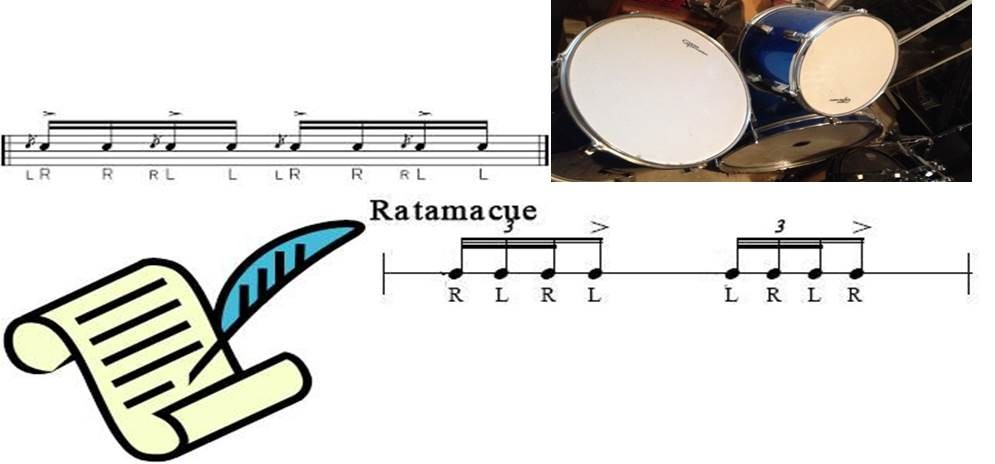


 Taps and Ratamacues