Category Archives: southern

A song of origins

When the leaves are swept away at night
and the chill cleaves to me,

I am reminded that I am descended
from those who worked the land.

tilled soil – tossed stone
to harvest, afford a life of

growing and yearning, splitting
and churning a song of origins

as a lantern tilted
sheds light on enclosed spaces

of circumstance. Places where poems
are seen, but not written.

Tuneful sounds once heard in the labors
of daylight, lulled by passing clouds

and mute when night comes on. Dirt is rinsed
from beneath fingernails and sleep arrives early

with a crisp quilt. Night whispers
it’s own beginning and the wind tosses aside
that which grips me.

Poet in Mind: Something about Blue Mountain

It has been over a year since I wrote something in this series. I had been thinking recently about poets and their writing process, and I was looking for writing that focused on southern ideals and influences- from an out-of-the limelight source. I decided to focus on post-civil war era writers in the south. Researching that idea lead me to an interesting story that isn’t necessarily just about poetry, but I can’t help but think it influenced poetry a great deal.

Mark Perrin Lowrey (1828-1885) served in the confederate army during the civil war, reaching the rank of Brigadier General. He was often referred to as the “preacher general” because of his background as a baptist preacher. Originally from Tennessee, he and his wife Sarah Holmes had settled in rural northeast Mississippi before the war. He returned after the war was over, and recognized the need for educational opportunities for women in the South. In 1873, he established the Blue Mountain Female Institute, later called Blue Mountain College, in Blue Mountain, Mississippi (near Tupelo).

Mark and Sarah Lowrey had eleven children. Among them, born April 2, 1860, named Mark Booth Lowrey (1860-1930) and his twin brother Perrin Holmes Lowrey. Both of the boys grew to have distinguished public careers. Perrin became a lawyer and judge in Mississippi and Booth became a well-known public speaker/essayist/satirist/humorist in his day. Both at times were faculty members at the Blue Mountain school.

Mark Booth Lowrey’s writing was well-regarded and he was a sought lecturer/speaker and professor of “expression” at the Blue Mountain Institute. Among Booth Lowrey’s canon of poetry is a collection of folk poetry, written in “Negro dialect” in the vein of Uncle Remus or Mark Twain, which was a popular form around the the turn of the century. It is an interesting style and raises thoughtful questions. It is worthy of its own discussion, but not here. Instead, I chose the following poem, a delightful song of admiration.

The Red-Haired Girl
by Mark Booth Lowrey

You may sing your song to the queenly grace
Of the raven-haired brunette,
To the faithful soul of the blue-eyed blonde
With her pose of a statuette;
You may pine and die over hazel eyes,
You may rave o’er the chestnut curl,
But for all the charms of the world combined,

Just give me a red-haired girl.

The eyes of jet and the raven locks
Are a source of rare delight,
And the moonbeam curls of the meek-eyed blonde
Are a soul-bewitching sight;
But the peach-like cheeks and the rosy lips
And the teeth of chiseled pearl,
Are the outward sparks of an inward light,

The soul of the red-haired girl.

Her cheeks are fresh as the blushing rose
That blooms in the joyous spring;
Her eyes are bright as the summer’s beams
That dance on the blue-bird’s wing;
Her hair is like to the autumn leaves
That glisten, and dance, and whirl;
And the seasons, all but the winter’s chill,

Are found in the red-haired girl.

The blush of spring, and the summer’s calm,
And the autumn’s sober truth,
The placid candor of sweet old age
And the fire of ardent youth,
O, Nature’s casket of rarest gems,
Of rubies and gold and pearl,
Of diamonds, onyx and evening stars,

O, royal, red-haired girl!
*******************************
Booth’s grandson, also named Perrin Holmes Lowrey (P.H. Lowrey)(1923-1965), also became a poet. He frequently published short stories and poems in his earlier years, but later shunned the life of a writer. Some of his poems reflect his time serving in the Navy during WWII. In Song of the Flag, P.H. Lowrey conveys a strong patriotism with imagery and word choices.

Song of the Flag
by Perrin Holmes Lowrey

OH, sing we the song of the flag,

Of the banner that billows and beats
As it rips through the wind on the roofs of the towns
And whips at the top of the fleets.
It tears through the rage of the blast,

In a fury it tugs to be free,
As it swings in the teeth of the storms of the land
And sings in the gales of the sea.

It runs in the winds of the plains,
It steadies and stiffens and thrills,
It streams in the smoke of the scattering clouds,
And gleams on the bayonet hills.

Oh, sing we a song of the flag,

As it bellies and flutters and flings,
As it leaps to a home in the arms of the air,
And laughs at the lusts of the kings.

It flames with the red of the dawn,
And the white of the breakers that race;
It burns with a beacon of wonderful stars
On a banner of infinite space
******************************

Another member of the faculty of Blue Mountain College, David E. Guyton (1880-1964), was a professor of history…and a poet. He was blind since the age of 11.

Triolets
by David E. Guyton

WHILE thou art near,
As now thou art,
I feel no fear,
While thou art near,
That others, Dear,
May win thy heart,
While thou art near,
As now thou art.

When thou art far,
As thou shalt be,
No jealous jar,
When thou art far,
Shall ever mar
My faith in thee,
When thou art far,
As thou shalt be.

Till saints deceive
And truth is trite,
Sweet Genevieve,
Till saints deceive,
I shall believe
And trust thee quite,
Till saints deceive
And truth is trite.

***********************
Muna Lee (1895-1965) was born in Mississippi, but moved to Oklahoma at an early age. She returned to study at Blue Mountain College in 1909, and was encouraged to write by David Guyton. After one year, she returned to Oklahoma and studied at the University of Oklahoma, followed by a return to Mississippi, ultimately graduating from the University of Mississippi in 1913. Early in her career, she was a school teacher, and wrote poems. As she felt the need to contribute more, she taught herself spanish and applied and was hired to be a translator for the US Secret Service during WWI. It was during this time that she became enamoured with latin american culture, and translated a large number spanish language poems. She had a long brilliant career in civil service, as a writer of fiction and poetry, and held an interest in Pan-american affairs in Puerto Rico, where she made her home in 1920. Much of her personal poetry seemed to focus on personal heartbreak-love lost-but was infused with imagery of beauty that filled the void.

The Unforgotten
By Muna Lee

I can forget so much at will:
That first walk in the snow,
The violet bed by the April rill,
The song we both loved so;

Even the rapture of Love’s perfect hour.
Even the anguish of Love’s disdain —
But never, but never, the little white flower
We found one day in the rain.

A Song of Happiness
By Muna Lee

From “Songs of Many Moods”

SO many folk are happy folk—
The feathered folk and furred!
And many a kindly glance I’ve had
And many a brisk bright word
From squirrel and from gray fieldmouse,
From cardinal and blackbird.

It’s only folk within the wood
Can know my happiness.
I did not tell my secret, but
I heard the robins guess;
The golden minnow knows it
Beneath the water-cress.

**********************************
Poetry often originates in quietest of places and is capable of reaching the farthest points. Each of these poets passed through a sleepy town with a small college in rural Mississippi. There are many such places I’m sure. Much of their poetry was published in small periodicals, something that is done much less these days.

And finding those gems, unknown before, is like finding “the little white flower in the rain.”

**********************************

1. The Mississippi Poets, Ernestine Clayton Deavours, 1922, E. H. Clarke & Brothers, Memphis, TN.
2. The Lives of Mississippi Authors, 1817-1967, James B. LLoyd, ed. 1981, University Press of Mississippi.
3. A Pan-American Life: Selected Poetry and Prose of Muna Lee, Edited and with biography by Jonathan Cohen, Foreword by Aurora Levins Morales, University of Wisconsin Press, 2004

And here we go….

For a few months now, I’ve been been collecting and reviewing, editing and reviewing, fretting and stewing, anxiously awaiting reviewing. I’ve been putting together my first collection of poetry. It is a chapter book that is my first attempt at widespread publication, entitled Accidental Songs.

It was both exhilarating and frustrating. The selection process for poems in a collection lays bare all the insecurities that I had in writing them in the first place. I believe that some of them are great poems, some of them are not that great. Some had to be cut altogether, others were recut and reformed into something that fit the overall idea for the collection. But as the sum of the whole, I think they all contribute something to the collection, and that was what I wanted.

I want to thank Sarah Wesson and Sherry O’keefe for their time and valuable comments during the manuscript review.

And I want to thank my wife for being the incredible supportive spouse she is. Thanks babe.

Of course, I invite you to visit Amazon.com and have a look for yourself. I’m proud that I could accomplish this effort. If you should choose to purchase a copy, Thanks!

Accidental Songs
Accidental Songs

Extracting meaning

Ain’t that the berries

was an expression my high school band director used when expressing excitement and surprise over something.

As he used it, this is an equivalent expression to:

Way Cool! and That’s the bees knees* and That’s great!.

Presumably, the origin of this saying has something to do with things being just as awesome as berries (which are pretty good – particularly in jams, pies, cobblers, and some simply by themselves). It is an interesting equivalency. And while the awesome culinary delights of berries are mostly undisputed (though some may have their favorites and not-so-favorite), there are other properties of berries that are quite unique and contribute to their awesomeness.

The extracts of berries contain flavonoids, phenolic acids, lignans and complex phenolic polymers (polymeric tannins). Among the flavonoids, the predominant group of anthocyanins give color to berry fruits (characteristically orange, red, or blue). These color compounds are interesting, because they can be used to study a variety of chemical interactions.

I find blueberries interesting because they are blue food. There are edible fruits that are green, yellow, orange or red, some purple…but this is the only naturally occurring blue food. In some of my recent reading**, I found an interesting research study on the potential use of blueberries for improvements in night vision. There have been numerous studies that claim this fact, but all have been subject to criticism for poor control studies. This recent report was inconclusive on the fact of improving night vision; however, it suggested a strong correlation between anthocyanin consumption and recovery after photobleaching (that moment when you step out of the dark into the blinding light, and you go.. Whoa! that’s bright!..and it takes you a moment to adjust.). The anthocyanins in blueberries may assist that recovery time.
stock-photo-blueberry-92682373

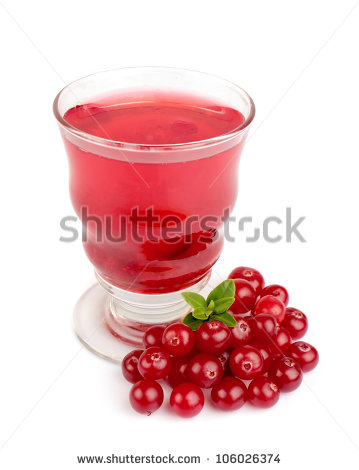
Another interesting berry fruit is cranberries. Like them or not, this staple of the Thanksgiving meal has also long been used as a folk remedy for urinary tract infections. In 2008, research*** was published that showed that cranberry juice cocktail inhibits the ability of E.coli bacteria (one of the common bacteria that causes UTI’s) from forming biofilms. This in turn makes it more likely that the bacteria can be flushed from your body.
stock-photo-glass-of-cranberry-juice-isolated-on-white-106026374

In raspberries, there is a diversity of antioxidant and anti-inflammatory phytonutrients unlike any other commonly consumed fruit****. Raspberries (both red and black) have been studied to determine their antioxidant content, and it has been suggested that raspberry ketone (rheosmin) increases metabolism in our fat cells, which has an impact on the management of obesity. Further, rheosmin can decrease activity of pancreatic lipase (a fat-digesting enzyme released by the pancreas), which may result in less digestion and absorption of fat. Another benefit is that by providing a rich supply of antioxidants and anti-inflammatory nutrients, raspberries can help lower risk of oxidative stress and excessive inflammation, reducing the potential for cancer cell formation.
stock-photo-raspberries-with-leaves-isolated-on-white-background-163382147
It is amazing that these small fruits pack so much punch in flavor and health benefits. So I suppose there is something to the expression –Ain’t that the berries.

===================================================

*Another curious expression that I’m not sure about.

**”Blueberry Effects on Dark Vision and Recovery after Photobleaching: Placebo-Controlled Crossover Studies” Journal of Agricultural & Food Chemistry 2014, 62 (46), pp 11180–11189

***New Biological Activities of Plant Proanthocyanidins,ACS Symposium Series Vol. 984, Chapter 7, Brandy J. Johnson, James B. Delehanty, Baochuan LinFrances S. Ligler, 2008, 101-114

****Anthocyanin content, antioxidant, anti-inflammatory and anticancer properties of blackberry and raspberry fruits. Journal of Food Composition and Analysis, Volume 23, Issue 6, September 2010, Pages 554-560.

that’s a lotta somethin’

Many years ago, I lived in the Crescent City.  

fleurdelis

This was in a time of relative innocence before Katrina, before the Saints were consistently good, before Casino gambling was legal, but ….it was not a time before there was good food.  I think there has ALWAYS been good food in New Orleans. It was probably written into the Louisiana Purchase agreement.  

You can’t swing a stick in that city without hitting a restaurant or sandwich shop or street vendor selling some delicacy…that is good to eat.

While living there, I discovered many unique foods: stale pastries with little plastic figurines in them are great party foods, street vendor hot dogs at 2 AM are THE BEST, oysters and crawfish taste better when you drink cheap local beers, coffee with chicory (tree bark) is best with cheap stale pastries or deep fried donuts with powdered sugar (beignets), crawfish etouffe’, po-boys are superior to subs, hoagies, or hero sandwiches,

and the muffuletta is a big-@$$ sandwich.

The moof-fa-what-Ah?

The muffuletta (moo-foo-let-ah) is a creation of the Italian community of New Orleans. The story goes that ca. 1906, Sicilian farmers selling produce at the Farmer’s Market would stop into the nearby Central Grocery for lunch. They would order ham, salami, cheese, olive salad, and bread, and then sit out on barrels or crates with everything spread out, eating everything separately (as is typical in Sicilian culture). The proprietor of Central Grocery (Signor Lupos Salvatore) suggested that they cut open the bread and prepare everything as a sandwich, and a new sandwich was born. The muffuletta is ubiquitous in New Orleans now, but there is a sign outside Central Grocery claiming the birthright. The name was derived from the bread roll used, which was determined to be better than french bread (already in high use for po-boy sandwiches) due to its soft interior and crunchy exterior. The typical muffuletta roll is a flat-ish bread disk that is about 10 inches in diameter. So it’s a huge sandwich. That is why it is typical for sandwich shops to sell 1/4 or 1/2 muffulettas.

Too much food you say?

There is a way to bring a little of that Noo Awlins food to your kitchen.

Single Muffuletta Sandwiches*

Ham, sliced (can be traditional Italian style ham (capicola), or something like Black Forest Ham. Use salty, cured hams, not sugar-cured or sweetened)
Salami, sliced
Provolone cheese, sliced
Mozzarella cheese, sliced
Marinated olive salad (Giardiniera or similar)**
Kaiser roll or similar bread

Cut the bread roll horizontally, and dress the bottom slice with the olive salad. Add the sliced ham, cheese and salami in alternating layers to the bottom bread roll and top with more cheese. Top the sandwich with more olive salad and the top piece of bread roll. You can prepare several sandwiches this way for a family, party or to save for later.

You may eat your muffuletta cold (as is traditional), or it can be toasted for 15 minutes or so (as shown below). Serve with some good ridged/ruffled potato chips.

20141005_130949[1]
*****************
*Disclaimer: This sandwich does not adhere to the strict ingredients of the muffuletta, but it is quite tasty and suitable for consumption.

**There are store brand giardiniera salad mixes that are quite good, or you can be adventurous and try to make your own. Someday, when I’m feeling more adventurous….

The secret’s in the sAuce

My tomato plants are slowly but surely yielding edible fractions. Last week may have been the high-water mark for yield. By Friday, I had ten tomatoes: six of them quite large (fist-size) and four reasonably mature ones (billiard ball size).

Running out of things to do with tomatoes shouldn’t really happen. There is always a need in a recipe, salad, or sandwich (BLTs anyone?). Tomatoes are rather ubiquitous in recipes, garnishes, sauces, or just eating them with salt and pepper. Given their prevalence, they don’t seem that special.

This past weekend, though, was special, because we had a house full of college kids visiting for the BIG football game. My two sons and seven friends stayed over Friday night…I had a golden opportunity to prepare something and as every good host should…we provided food.

Meatball subs – I cheated and used store bought tomato sauce… though if I had a large enough yield I would try to make my own tomato sauce.

Cheese dip with tomatoes and green chiles – again store bought and totally synthetic complete with a brick of melt-a-cheese, 2 cans of diced tomatoes and hotdog chili. No mess, no fuss. But…a family favorite.

I had that pile of tomatoes just sitting there. I decided to make salsa…from scratch.

I have an app on my phone to help learn languages. And I’ve recently been learning Spanish. One of the vocabulary words a few lessons ago was la salsa or the sauce. Language is a peculiar thing. Salsa – to me- has always been that tomato based condiment you get with chips as a free appetizer at Mexican restaurants* – And….it is that…but the word means any sauce.

We’ve come to use the word much like a brand shorthand for a product (Kleenex for tissue, for example). I found that the world of salsa (sauce) is varied and complicated.

There’s salsa roja (cooked tomato sauce), salsa verde (green sauce, made with tomatillos), salsa ranchero (ranch-style sauce cooked with peppers and roasted tomatoes), as well as mole’ and guacomole’ being classified as salsas**. All of these are generally blended or cooked.

I made a coarsely chopped mixture.

So technically I made salsa picada (chopped sauce) or pico de gallo (rooster’s beak???) -if you prefer, as follows:

4 large ripened tomatoes
1/2 yellow onion
1 bunch cilantro (12 stems or so)
1 medium serrano pepper (slightly ripened)
2 tablespoons lime juice
5 or 6 liberal dashes of garlic salt

Chop tomatoes, onion and cilantro and mix in a glass bowl. Finely chop the pepper and add to the mix. Stir and mix liberally with spatula. Add lime juice and garlic salt. Add more to adjust to taste if needed. Mix well. Cover and refrigerate for an hour before eating (if you can). Get some good sturdy corn chips to eat it.

My sons and their friends devoured it. (before I could get a picture)

I guess it was that good.

________________________________

*I recognize it is also a dance style, but I have never tried to dance the salsa. And I’m writing about food here.
**Not to mention the mango, pineapple, corn, and carrot varieties.
There might even be pumpkin or squash salsas in keeping with the autumn season.

The Grilling Gene/Chipotle-Beer Marinade

I am descended from a long line of outdoor cooking enthusiasts.

I’ve heard stories about my paternal grandfather, who would dig a hole in his back yard, start a fire and set up up a kettle of lard to deep fry catfish and oysters. I also recall visiting my grandparent’s house as a child and he would cook filet mignon on his charcoal grill.

My Dad is also adept in his grilling skills, and cooks a mean steak and ribs on charcoal.

I have enjoyed outdoor cooking since my childhood, when my Dad would host parties for his students and would cook large quantities of hamburger patties and hot dogs.  I would just hang out near the grill and watch. Back in the days before cable television and cooking networks, I would watch Justin Wilson on public television every chance I got.

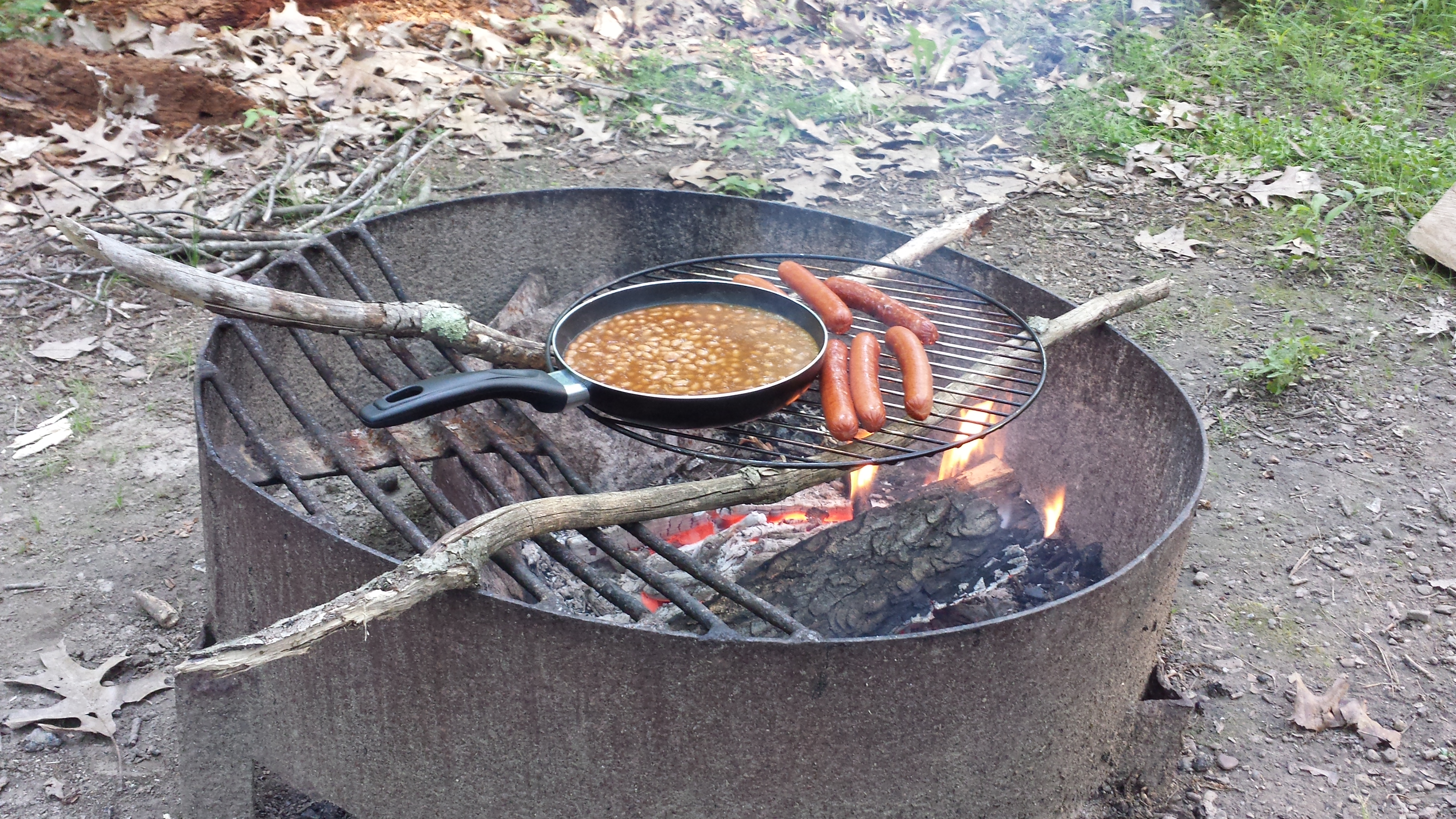
This enthusiasm for grilling seems to have passed on to my sons, both of whom enjoy outdoor cooking, as seen by our campfire feast from last Father’s Day weekend.

campfire

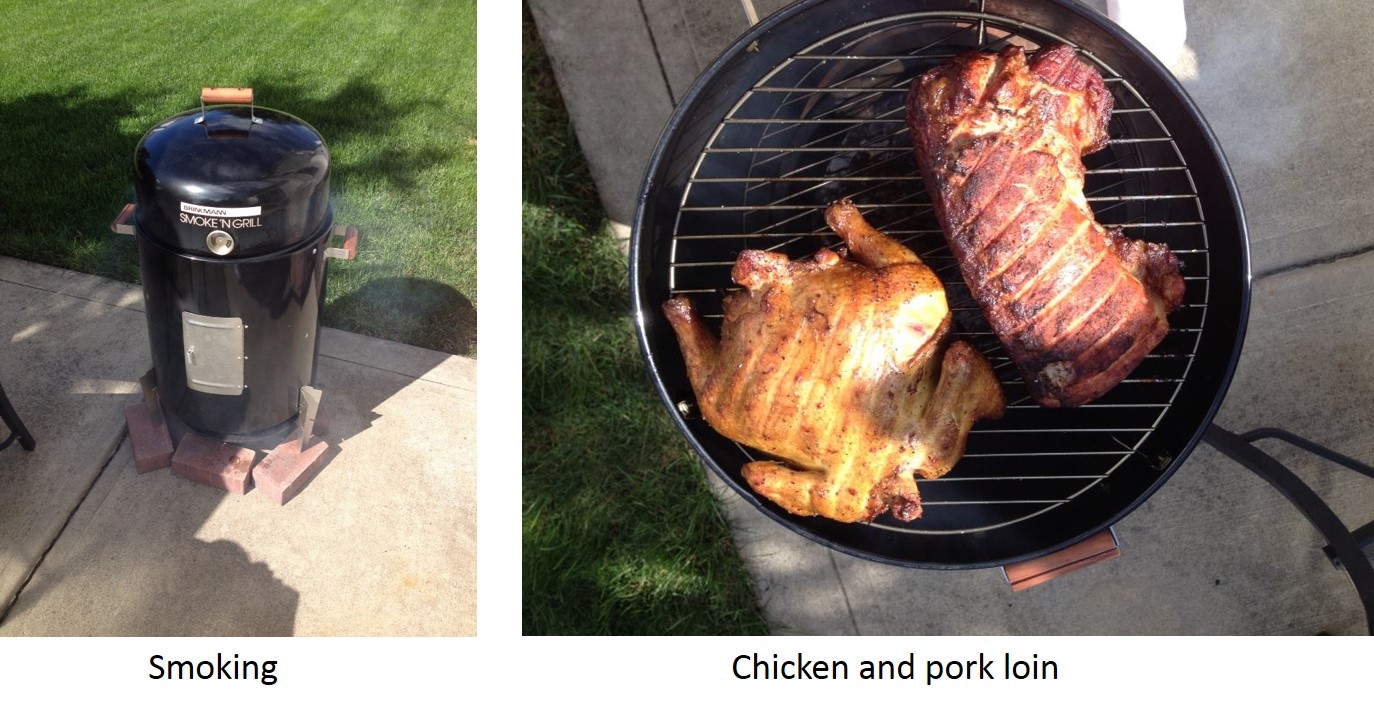
I used to cook on charcoal, exclusively, because at the time I couldn’t afford a gas grill.  I was brought up on charcoal grilling, and frankly I like the taste of char-grilled meats.  For a time, I owned a smoker grill and used it for chicken, steaks, pork…whatever would cook.  That grill didn’t make a move with us at one point, and I did without until last year..when my 10 year work anniversary gift  was a smoker grill.  I’ve used it several times over the last year, with excellent results.  An example is shown below from it’s inaugural cook.

smoker 2013

I now also have a gas grill, that I use quite often, especially during the summer.  I use it for convenience, because there is not much setup or cleanup required.  I like to keep the grill charred for flavor purposes.  I cook *everything* on this grill (ribs, chicken, steak, hamburger, brats, hot dogs, pork chops, pork loin…etc) In a nod to my Grandaddy, I once cooked fried catfish and oysters on the side burner, using a large cast-iron skillet and vegetable oil (no lard).

It is quite enjoyable to cook this way. But a major part of outdoor cooking is preparing the dish so that it has the right flavor. Just this week I prepared a set of pork chops for dinner using the following marinade.

1 bottle beer (I used an IPA, because I had it left over – you can use whatever you have)
2 teaspoons of salt
2 teaspoons of cracked black pepper
4 teaspoons of garlic powder
1 chipotle pepper (I used an orange one), cut into 4 pieces.

I mixed all the marinade (except the chipotle pepper) in a large measuring cup and set it aside. I rinsed a package of 4 pork chops, lightly salted them on both sides and placed them in a gallon size plastic bag. I poured the beer marinade over the chops and closed the bag and mixed the contents for about a minute. I reopened the bag and added the pepper pieces to the mix, closed the bag and remixed the contents. This time, I found each of the pepper quarters and squeezed them in the marinade (through the bag). I used the orange chipotle because I like the flavor of the chipotle pepper, but I don’t like it overwhelming the natural flavor of the meat. Certain restaurants tend to overdo it – in my opinion. You can use multiple peppers, a greener pepper (hotter), or a different pepper type if that suits your tastes.

I let the chops marinate in the refrigerator for ~ 4 hours, flipping the bag once or twice during that period. This is something that is variable…I think you can marinate up to 12 hours and it would be fine. Some people adhere to more strict marination times.

I preheated the gas grill for about 10 minutes prior to cooking, then reduced the flame to a medium low setting. I placed the chops on the hot grill surface and closed the lid, cooking for about 7 minutes. I then flipped the chops and cooked the other side, about 7 minutes. I took the chops off the grill and covered them with foil until the rest of the meal was ready.

Along with this, I prepared a bunch of asparagus brushed with olive oil and salt and pepper, and cooked in a foil pouch on the upper shelf of the grill. Some chopped red potatoes were seasoned with ranch seasoning and olive oil and baked at 350C in the oven for 30 minutes. Also, a small ripe tomato from the tomato jungle.

The result:

pork chop

Excellent. I garontee!

Poet in Mind: Lily Peter

What makes a Poet Laureate?

Is it a lifetime of service, enthusiasm for your craft? A prolific output of quality work?

A willingness to be a part of something beyond yourself?

Lily Peter (1891-1991) was the Poet Laureate of Arkansas from 1971 until her death in 1991. She was born in rural eastern Arkansas to a farming family, descendents of German/Austrian immigrants who had traveled the length of the American landscape to eventually settle in the harsh Mississippi River delta. Lily was the oldest of nine children of whom only five survived into adulthood. As the eldest, she had responsibility put on her. It is likely that Lily developed a strong sense of herself through schooling and a desire to learn. She was educated at home until her mother and father could no longer keep up with her eagerness to learn; they sent her to area schools. Eventually, she was sent to live with relatives in Ohio in order to receive a proper education. There was recognition by her parents that education was the way to a solid future and it was evident during this time that there were a shortage of qualified teachers in rural Arkansas. While Lily was away in Ohio, her father died in a farming accident. Lily was told not to return for the funeral because she was still in school and wouldn’t be able to return in time to finish the year. It is no surprise that after graduation, Lily chose to enter the teaching profession and returned home to help support the family. She helped educate her siblings, took care of her frail mother, helped run the farm…she took on the leadership role of the family.

Flight of Birds**blackbirds
Blackbirds
banking into the wind against a lilac winter sky
fill me with wonder and a sense of doom.
How little time have they and I
here to enoy the swirling wintry bloom
of the thin petaled air!

Wild words
crowd to my lips and are not spoken.
Consciousness, the shared treasure we may not
keep,
we spend our breath in destroying, and when it is
broken
and lost in the last sleep,
who will there be to care?

Her imaginative nature was evident in her childhood. In her biography*, it states that when she turned 5, she was convinced that she would be grown up and wanted to clean the barn by herself. When she woke that day and discovered she had not grown, she was inconsolable. She cried all day. It was this emotional attachment to her desires/imagination that shaped Lily’s future. It was clear that as an adult, Lily became very self-reliant. She continued to seek educational opportunities and ways to experience the world. She never married, though she had several suitors and was even engaged at one point.

Lily Peter began writing as a child, as playing with words seemed to satisfy her need for inventiveness. Most of her early writings consisted of journal entries, observations about community life in rural Arkansas, bits of light verse, and correspondence, all of which is contained in the archives at the University of Central Arkansas. Later in life, her poetry held a more somber tone. For example, “The Green Linen of Summer,” shown below is about protection of yourself against difficulties that are inevitable in life; I think it reflects her practical view of the world, based on her experiences with loss (death of her father and mother) and struggles to maintain her family’s farm during floods, epidemics, etc.

The Green Linen of Summer**

image courtesy of etsy.com

image courtesy of etsy.com

I wrap my thoughts in the green linen of summer
Against the terror of the dragon wind,
And pray that the linen may not too soon be thread-
bare,
Its texture thinned.

For by and by I know will come November
With its wintry blast;
And what is there to keep body and soul from
freezing,
If the linen do not last?

She only published four volumes of poetry*** in her lifetime. Yet, this didn’t seem to define her. She was much more to the state of Arkansas than a published poet. She was a teacher for 40 years, a successful cotton farmer, an environmental advocate, an accomplished violinist (studied at Columbia and Julliard), a writer, and a philanthropist. She had supported musical causes throughout her adult life, mostly on behalf of the Moravian Church. One of her ancestors was the composer John Frederick Peter, who was influencial in early American music. She underwrote the cost of bringing the Philadelphia Philharmonic Orchestra to Little Rock, Arkansas in 1969 by putting a mortgage on her plantation. She did this because she wanted “the people of Arkansas to be exposed to good music, to have a chance I didn’t have.”

Aftersong Instead of a Coda**Common_hawthorn_flowers

To leave this music,
to lie forever in the moonless
dark, where is no peach blossom, cloud or willow,
will be hard for me, who have loved this swampland always.

But in the dark I shall somewhere find Persephone,
and she will take my hand and I will say, “Please
show me the way of the journey back to the sunlight!”
Persephone has made it countless times and would
know!

And some spring morning you will see us running
up the slope
of the thickety bayou with violets in our hands.

And suddenly
I shall be translated to music: a prelude
of April grass; the improvisation of the bacchanal
muscadine; a transposition of chlorophyll,
the plangent chord that evokes the wild elder and
hawthorne
from the numbered bass of the atoms, the rhythm
of light.

Lily Peter lived to see 100 years. One of her more well-known poems is “Note Left on a Doorstep,” which gives us her view of the beauty of life and how it overcomes death.

**************
* A Nude Singularity, Lily Peter of Arkansas, AnnieLaura M. Jaggers, UCA Press, 1993. The title is derived from the astronomer’s terminology of an unexplainable phenomenon. This phenomenon being how Lily Peter became all the things she did, in spite of all the odds against her.

**Lily Peter,
from “The Green Linen of Summer and other Poems”
copyright 1964 by Robert Moore Allen
(out of print)

***Her published works consist of a collection of published poems entitled “The Green Linen of Summer and other poems,” copyright 1964 Robert Moore Allen ; “The Sea Dream of the Mississippi” (another collection of poems), “In the Beginning, Myths of The Western World retold in poetry and prose,” The University of Arkansas Press, 1983; “The Great Riding, The Story of Desoto in America,” originally published in 1966 by Robert Moore Allen (republished by the University of Arkansas Press in 1983).

Aftermath

The addition of slaw
– made with vinegar and equal parts
horse-radish, mustard, and ketchup
to any picnic dinner
Is rivaled by the
subtraction of potato salad,
the kind with sweet relish and
mayonnaise.  Divided loyalties about
how these dishes get made
and who gets the leftovers,
stored in plastic bowls
and covered with multi-ply towels
to keep away the flies.

NaPoWriMo 2013 Day 22