Tag Archives: poetry

Poet in Mind: John Clare

John Clare*, the Northamptonshire peasant poet was born on July 13, 1793. This is remarkable, because last Friday (July 13th), I was considering a Poet in Mind post, and thought of John Clare, whom I had discovered quite by accident several years ago. I was perusing the stacks of my library’s poetry section, something I enjoy because I discover new things, and I saw a collection of John Clare poetry. Out of curiosity, I checked it out and was not sorry for it.

John Clare was born into an illiterate farming family. He did receive some formal schooling, probably enough to function in a class-oriented society. He worked as a farm labourer to earn money. The fact that much of his poetry focuses on the natural world leads me to think he probably wrote much of his poetry in his head while watching nature in the fields he worked. He was also of the Romantic style.

Summer
By John Clare

Come we to the summer, to the summer we will come,
For the woods are full of bluebells and the hedges full of bloom,
And the crow is on the oak a-building of her nest,
And love is burning diamonds in my true lover’s breast;
She sits beneath the whitethorn a-plaiting of her hair,
And I will to my true lover with a fond request repair;
I will look upon her face, I will in her beauty rest,
And lay my aching weariness upon her lovely breast.

The clock-a-clay is creeping on the open bloom of May,
The merry bee is trampling the pinky threads all day,
And the chaffinch it is brooding on its grey mossy nest
In the whitethorn bush where I will lean upon my lover’s breast;
I’ll lean upon her breast and I’ll whisper in her ear
That I cannot get a wink o’sleep for thinking of my dear;
I hunger at my meat and I daily fade away
Like the hedge rose that is broken in the heat of the day.

The Romantic style can be summed up as “the spontaneous overflow of powerful feelings”**, with the additional work and “pain” of using strict meter and form. It’s not easy expressing your emotions in such structural forms, and the Romantic Movement recognized that as a means to develop “good” poetry.

Trial by fire, as it were.

John Clare was always a lesser known poet, perhaps because of his humble background. He actually did publish during his lifetime, though he could not make a living as a poet. He had to continue with a variety of manual labor jobs to support his wife and family. It was a struggle that contributed to poor health, heavy drinking and bouts of depression. However, he wrote rather prolifically. About love and nature, Rural life, his passions***, animals, birds, insects.

First Love
By John Clare
I ne’er was struck before that hour
With love so sudden and so sweet,
Her face it bloomed like a sweet flower
And stole my heart away complete.
My face turned pale as deadly pale,
My legs refused to walk away,
And when she looked, what could I ail?
My life and all seemed turned to clay.

And then my blood rushed to my face
And took my eyesight quite away,
The trees and bushes round the place
Seemed midnight at noonday.
I could not see a single thing,
Words from my eyes did start—
They spoke as chords do from the string,
And blood burnt round my heart.

Are flowers the winter’s choice?
Is love’s bed always snow?
She seemed to hear my silent voice,
Not love’s appeals to know.
I never saw so sweet a face
As that I stood before.
My heart has left its dwelling-place
And can return no more.

His depression and declining mental health eventually led him to admitting himself to an asylum where he primarily lived the last 27 years of his life. After his death in 1864, his poetry languished for the remainder of the 19th century, but Clare’s poetry was rediscovered in the late 20th century, and he was recognized for his keen descriptions of nature, the rural English countryside, and his dedicated practice of the Romantic style.

There is a John Clare Society
Several of his collections are posted online at John Clare Info.

To close, I selected two poems that juxtapose different views of hope. Both demonstrate the power of poetry, the struggles that we face, and how we can meet the challenges.

TO HOPE.
By John Clare

AH, smiling cherub! cheating Hope, adieu!

No more I’ll listen to your pleasing themes;

No more your flattering scenes with joy renew,

For ah, I’ve found them all delusive dreams:

Yes, mere delusions all; therefore, adieu!

No more shall you this aching heart beguile;

No more your fleeting joys will I pursue,

That mock’d my sorrows when they seem’d to smile,

And flatter’d tales that never will be true:

Tales, only told to aggravate distress

And make me at my fate the more repine,

By whispering joys I never can possess,

And painting scenes that never can be mine.

THE INSTINCT OF HOPE
By John Clare
Is there another world for this frail dust
To warm with life and be itself again?
Something about me daily speaks there must,
And why should instinct nourish hopes in vain?
‘Tis nature’s prophesy that such will be,
And everything seems struggling to explain
The close sealed volume of its mystery.
Time wandering onward keeps its usual pace
As seeming anxious of eternity,
To meet that calm and find a resting place.
E’en the small violet feels a future power
And waits each year renewing blooms to bring,
And surely man is no inferior flower
To die unworthy of a second spring?

*John Clare image by Edward Scriven, after William Hilton
stipple engraving, published 1821
NPG D5221
© National Portrait Gallery, London

**William Wordsworth. He knew a thing or two about Romantic poetry.

***He had a lifelong crush on his first love, Mary Joyce. She is a frequent subject of his love poetry, and obviously his muse. He was never allowed to court her formally, because they were of different classes in society. He continued to write about her throughout his life, and was apparently devastated to learn of her death in 1838. This is supposed to have contributed to his depression and eventual self-imposed admission to an asylum.
Siren

She wanted that life, she thought,
After wading in the water up and down the beach
Her feet embedding in the moving sand.
The allure of the ocean beyond pulled her further out
To that pale white line at the edge
Of the blue-green horizon,
Until there was no place to stand,
only piled surf
And depths of a world she could not comprehend.

With remnants of foam,
The continuing washes of the waves
Moved her ashore in the sand
like a child’s tantrum from anger to tears,
Bits of seaweed in her hair,
and a breathless sobbing
that no mother can placate.

a work in progress

there are tools strewn
here and there

the monkey wrench consorts
with the flat-head screwdriver

I managed to replace the toilet bob,
which keeps the tank from overflowing,
but the shut-off valve will not completely
close, giving a slow drip of water
out onto the blue and green beach towel.

and to think I left this poem
sitting here,
brimming with possibility.

Cento (of the sea)

A Cento is a poem made up entirely of lines and passages from other works, arranged in an order to mean something completely different. Here is a Cento comprised of a little bit of everything from Spike Milligan to Sylvia Plath. Enjoy! Let me know what you think.

*******************************

It’s always ourselves we find in the sea,
The green waves foam and thrust and slide,
the sea was wet as wet could be,
all my dreams come back to me.

It’s really best that tides come in
(The water soon came in, it did).
It looked so pitiful and sad,
despite this careful scrutiny.

Deeds cannot dream what dreams can do
No birds were flying overhead –
They “noticed” me-they noticed me
made of pumpkins and pelican glue.

A secret, kept from all the rest
(I never could talk to you)
Of pygmies, palms and pirates,
said the Duck to the Kangaroo.

There was an old man in a boat,
and as in uffish thought he stood,
they danced by the light of the moon.
Their heads are green, and their hands are blue,
I only sing the tunes.

Poet in Mind: E.E. Cummings

For National Poetry Month, I wanted to spotlight a poet that I enjoy reading. There are plenty of them that I like…for different reasons.

One of the poets I enjoy reading is E.E. Cummings…Edward Estlin Cummings.

He was born in 1894 and actually wanted to be a poet at an early age. Between the ages of 8 and 22, he wrote a poem a day. He explored many of the traditional forms and by the time he was finished at Harvard in 1916, found a voice in dynamic use of language. His subject matter focused on traditional themes: love, childhood, flowers…all somewhat old-fashioned by “modern” standards of the day. Yet, he succeeded through experimentation with language and syntax, lack of punctuation or overuse of it, and was an innovator in concrete poetry, or shape poetry. Very much a romantic, he was able to inject life into a lyrical voice with such ingenuity.

A wonderful example of his use of language, and how the tone of his words shaped the poem (even though they make no sense grammatically) is in [anyone lived in a pretty how town].

>>>>>>>>><<<<<<<<<<<

anyone lived in a pretty how town
(with up so floating many bells down)
spring summer autumn winter
he sang his didn't he danced his did.

Women and men (both little and small)
cared for anyone not at all
they sowed their isn't they reaped their same
sun moon stars rain

children guessed (but only a few
and down they forgot as up they grew
autumn winter spring summer)
that noone loved him more by more

when by now and tree by leaf
she laughed his joy she cried his grief
bird by snow and stir by still
anyone's any was all to her

someones married their everyones
laughed their cryings and did their dance
(sleep wake hope and then)they
said their nevers they slept their dream

stars rain sun moon
(and only the snow can begin to explain
how children are apt to forget to remember
with up so floating many bells down)

one day anyone died i guess
(and noone stooped to kiss his face)
busy folk buried them side by side
little by little and was by was

all by all and deep by deep
and more by more they dream their sleep
noone and anyone earth by april
with by spirit and if by yes.

Women and men (both dong and ding)
summer autumn winter spring
reaped their sowing and went their came
sun moon stars rain
published in Poetry (August 1940)

Other poems are far more obscure and yet, architecturally interesting. The sound of the words together with the flow of the line makes a sing-song quality to much of his poetry. You can read some of them here. Cummings was raised in a Unitarian family and was a pacifist in his younger years. During the 1st World War he enlisted in the ambulance corps, and was actually detained and imprisoned for 3 months by the French on suspicion of espionage. He and a friend were apparently bored with their jobs and inserted veiled and provocative comments into their letters home, just to baffle the French censors.

O sweet spontaneous by E. E. Cummings
O sweet spontaneous
earth how often have
the doting

fingers of
prurient philosophies pinched
and poked

thee
has the naughty thumb
of science prodded
thy

beauty how
often have religions taken
thee upon their scraggy
knees squeezing and

buffeting thee that thou mightest conceive
gods
but
true

to the incomparable
couch of death thy
rhythmic
lover

thou answerest

them only with

spring

Apparently, the man was also a philanderer. He wrote a trove of love poetry, some quite racy. He had an affair with one of his best friend’s wives, fathered a child with her, while they were still married. His friend continued to work on his behalf as a publisher after that. Cummings had a way with words…

supposing i dreamed this)… (IX) by E. E. Cummings
supposing i dreamed this)
only imagine,when day has thrilled
you are a house around which
i am a wind-

your walls will not reckon how
strangely my life is curved
since the best he can do
is to peer through windows,unobserved

-listen,for(out of all
things)dream is noone's fool;
if this wind who i am prowls
carefully around this house of you

love being such,or such,
the normal corners of your heart
will never guess how much
my wonderful jealousy is dark

if light should flower:
or laughing sparkle from
the shut house(around and around
which a poor wind will roam

Now comes the part where…

We all make lists.

I like lists because they 1) help me remember things and 2) I have a sense of accomplishment when I can mark something off the list. This is particularly true with activities and goals. I like seeing a piece of paper with lines through items.

So with the new year rapidly approaching, I thought that I would put a list here on the blog…not that I have a tremendous following that cares. It seems like a natural place to put stuff like that.

Things I want to do better in 2012
So here goes…
1. Read more books, one at a time – I am a bad parallel reader. I try to read too many things at once. It doesn’t work. Best thing ever – Books on Audio for commutes.
2. Get more exercise – Yeah I know, this is used every year and I give up the ghost every March or so. Consistent, paced activity…that’s all I’m shooting for this year. I want to be healthy, shouldn’t you?
3. Make more money – I know that sounds materialistic. Be real, we all want that, especially in this era of poorly performing stock funds. Actually, I want to be a better steward of what I have been blessed to receive. In that way, it would seem like I am making more money.
4. Have some more poetry published – I do write because I enjoy it, but everyone craves acceptance. I’ve had one item published online (see links), and I’ve been notified that a couple of other poems will be also published online during the first few months of 2012. Stay tuned for more information.
5. Come up with a 10 year plan – I’m approaching what should be the twilight years of my career and I want to have more goals in my back pocket. New interests, travel, any ideas?

What about you? You hearty few who might stumble upon or follow this blog…:)

What are your goals? How do you feel about lists?

Happy New Year to you. I wish you the best in 2012. Work hard, have fun, and be safe.

John

icicle lights

I see glittering in the eyes
when she does something thoughtful

A gesture that passes between souls
-Unspoken-

or when she says a kind word,
and the light shimmers

chasing other photons down the string
passing through junctures,

and out into air
as new growth.

I see a flickering nimbus
in the darkness,

as I pause to blink,

then hope
that the reflection is undimmed
when I turn to face her smile.

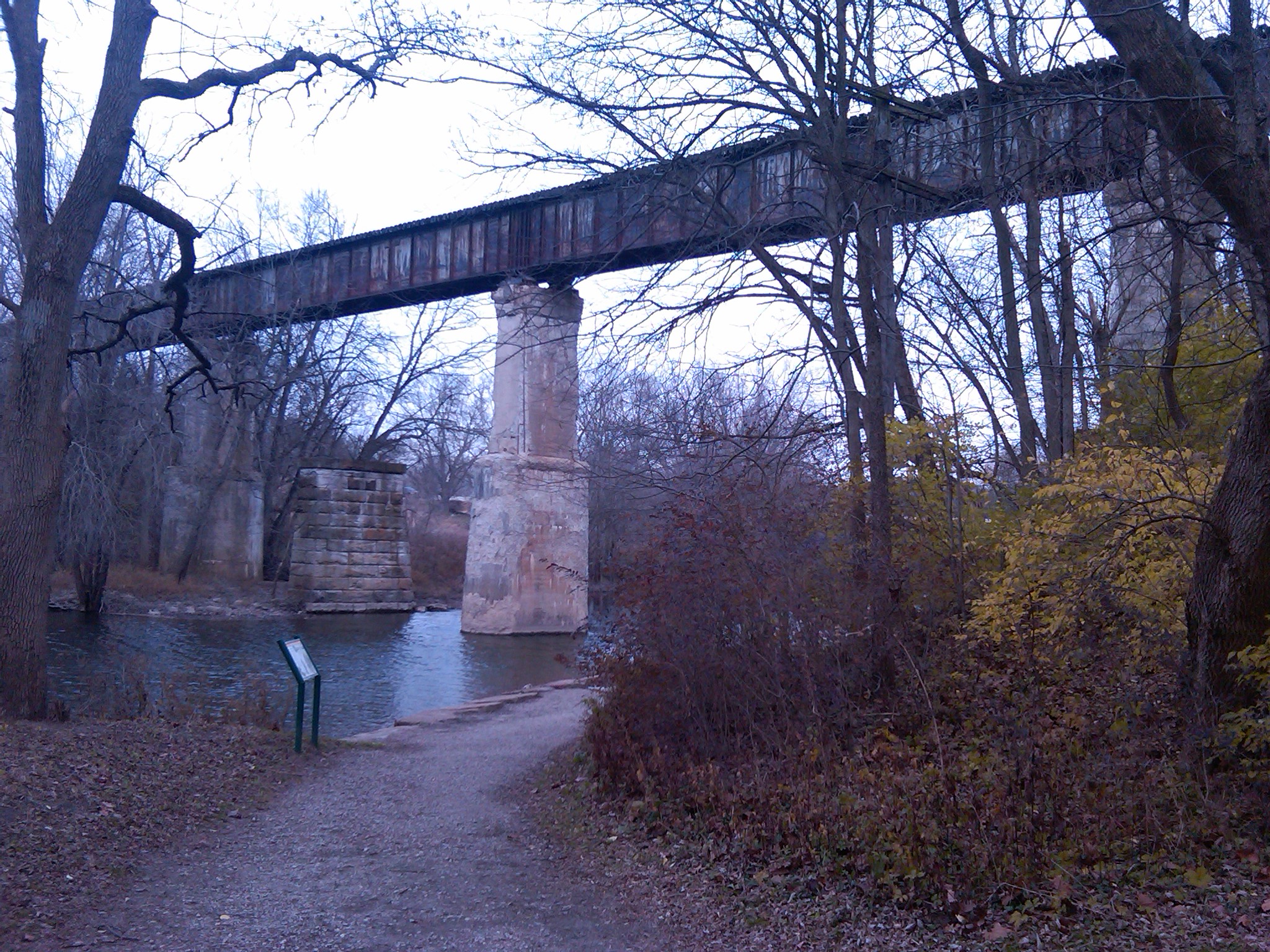
Where the road intersects

very near the river,
just below the old railway line
and across from the covered deer path
that veered into the unknown,

we discussed our own trails
some thirty years apart.

I had walked it.

He was a cross-country runner.

I recognized the race path
and never once assumed
it to be repeated.

Yet, for a while, he ran in my footsteps
and was running the hills smart.

Meanwhile other runners passed intermittently,
and we handed them cups of water and
they would douse themselves,
discarding the trash along the way.

We picked up the litter
so the path would be as we found it.

-unscarred and ready for travel.

Grasping

In that moment before grief
When you have a hold on something
-it could be anything-
maybe carrots,
or a sheet of paper,
or pencil.
You release your grip in an instant.
Time does not continue,
yet the object falls away.

Not like dropping a ball,
with a child’s anticipation of return.
Neither as with a moment of revelation,
or when gasps follow a feverish plea
for more.

It is different.

It is a moment we cannot predict,
unable to stage a photograph
of the way the touch vanishes
and grasp fails,
yet the burden of loss enfolds.

Becoming

If you cannot be a poet, be the poem.
~David Carradine

I struggled,
no…toiled
quietly.
with the puzzle
of what was to be my next poem.

Separating the magnetic pieces of words
on the table.

Shuffling them into phrases
and finding
only prepositions
and adverbs:
Often before,
Sometimes between,
but mostly among
all of the words.

An admirer asked,
“Have you written anything recently?”
with a nod and held-breath and widening eyes

I replied with a slow head-shake.
and a sigh,
then realized what I had not done

-placed myself inside the poem-

I left the table
words askew
until perhaps tomorrow.