Category Archives: Poems

reasons

between the plane trees
by the lake
I would place a park bench
so that I could watch
the water gesture
and volley,
shaded from the sun
quiet interrupted
by a cardinal, or
the leaves that surmount
distant sounds of
traffic,
reminding me of
continuum
states
that overlap
between the plane trees

************

between the plane trees
that overlap
states
continuum
reminding me of
traffic
distant sounds of
the leaves that surmount
by a cardinal, or
quiet interrupted
shaded from the sun
and volley,
the water gesture
so that I could watch
I would place a park bench
by the lake
between the plane trees.

Poet in Mind: Lily Peter

What makes a Poet Laureate?

Is it a lifetime of service, enthusiasm for your craft? A prolific output of quality work?

A willingness to be a part of something beyond yourself?

Lily Peter (1891-1991) was the Poet Laureate of Arkansas from 1971 until her death in 1991. She was born in rural eastern Arkansas to a farming family, descendents of German/Austrian immigrants who had traveled the length of the American landscape to eventually settle in the harsh Mississippi River delta. Lily was the oldest of nine children of whom only five survived into adulthood. As the eldest, she had responsibility put on her. It is likely that Lily developed a strong sense of herself through schooling and a desire to learn. She was educated at home until her mother and father could no longer keep up with her eagerness to learn; they sent her to area schools. Eventually, she was sent to live with relatives in Ohio in order to receive a proper education. There was recognition by her parents that education was the way to a solid future and it was evident during this time that there were a shortage of qualified teachers in rural Arkansas. While Lily was away in Ohio, her father died in a farming accident. Lily was told not to return for the funeral because she was still in school and wouldn’t be able to return in time to finish the year. It is no surprise that after graduation, Lily chose to enter the teaching profession and returned home to help support the family. She helped educate her siblings, took care of her frail mother, helped run the farm…she took on the leadership role of the family.

Flight of Birds**blackbirds
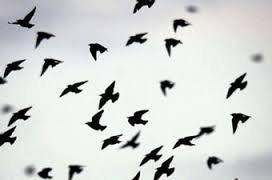
Blackbirds
banking into the wind against a lilac winter sky
fill me with wonder and a sense of doom.
How little time have they and I
here to enoy the swirling wintry bloom
of the thin petaled air!

Wild words
crowd to my lips and are not spoken.
Consciousness, the shared treasure we may not
keep,
we spend our breath in destroying, and when it is
broken
and lost in the last sleep,
who will there be to care?

Her imaginative nature was evident in her childhood. In her biography*, it states that when she turned 5, she was convinced that she would be grown up and wanted to clean the barn by herself. When she woke that day and discovered she had not grown, she was inconsolable. She cried all day. It was this emotional attachment to her desires/imagination that shaped Lily’s future. It was clear that as an adult, Lily became very self-reliant. She continued to seek educational opportunities and ways to experience the world. She never married, though she had several suitors and was even engaged at one point.

Lily Peter began writing as a child, as playing with words seemed to satisfy her need for inventiveness. Most of her early writings consisted of journal entries, observations about community life in rural Arkansas, bits of light verse, and correspondence, all of which is contained in the archives at the University of Central Arkansas. Later in life, her poetry held a more somber tone. For example, “The Green Linen of Summer,” shown below is about protection of yourself against difficulties that are inevitable in life; I think it reflects her practical view of the world, based on her experiences with loss (death of her father and mother) and struggles to maintain her family’s farm during floods, epidemics, etc.

The Green Linen of Summer**
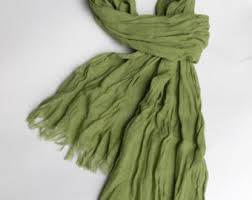
image courtesy of etsy.com

image courtesy of etsy.com

I wrap my thoughts in the green linen of summer
Against the terror of the dragon wind,
And pray that the linen may not too soon be thread-
bare,
Its texture thinned.

For by and by I know will come November
With its wintry blast;
And what is there to keep body and soul from
freezing,
If the linen do not last?

She only published four volumes of poetry*** in her lifetime. Yet, this didn’t seem to define her. She was much more to the state of Arkansas than a published poet. She was a teacher for 40 years, a successful cotton farmer, an environmental advocate, an accomplished violinist (studied at Columbia and Julliard), a writer, and a philanthropist. She had supported musical causes throughout her adult life, mostly on behalf of the Moravian Church. One of her ancestors was the composer John Frederick Peter, who was influencial in early American music. She underwrote the cost of bringing the Philadelphia Philharmonic Orchestra to Little Rock, Arkansas in 1969 by putting a mortgage on her plantation. She did this because she wanted “the people of Arkansas to be exposed to good music, to have a chance I didn’t have.”

Aftersong Instead of a Coda**Common_hawthorn_flowers

To leave this music,
to lie forever in the moonless
dark, where is no peach blossom, cloud or willow,
will be hard for me, who have loved this swampland always.

But in the dark I shall somewhere find Persephone,
and she will take my hand and I will say, “Please
show me the way of the journey back to the sunlight!”
Persephone has made it countless times and would
know!

And some spring morning you will see us running
up the slope
of the thickety bayou with violets in our hands.

And suddenly
I shall be translated to music: a prelude
of April grass; the improvisation of the bacchanal
muscadine; a transposition of chlorophyll,
the plangent chord that evokes the wild elder and
hawthorne
from the numbered bass of the atoms, the rhythm
of light.

Lily Peter lived to see 100 years. One of her more well-known poems is “Note Left on a Doorstep,” which gives us her view of the beauty of life and how it overcomes death.

**************
* A Nude Singularity, Lily Peter of Arkansas, AnnieLaura M. Jaggers, UCA Press, 1993. The title is derived from the astronomer’s terminology of an unexplainable phenomenon. This phenomenon being how Lily Peter became all the things she did, in spite of all the odds against her.

**Lily Peter,
from “The Green Linen of Summer and other Poems”
copyright 1964 by Robert Moore Allen
(out of print)

***Her published works consist of a collection of published poems entitled “The Green Linen of Summer and other poems,” copyright 1964 Robert Moore Allen ; “The Sea Dream of the Mississippi” (another collection of poems), “In the Beginning, Myths of The Western World retold in poetry and prose,” The University of Arkansas Press, 1983; “The Great Riding, The Story of Desoto in America,” originally published in 1966 by Robert Moore Allen (republished by the University of Arkansas Press in 1983).
caesura

the grass grows tallest
near the edge of the thicket

and offers a caesura
from summer’s pulsation

to the meek and ferocious, alike.
A haven for the seemingly disparate

field mice and feral cats,
hiding in the whiskey grass;

neither thinking to sound or move,
until darkness arrives, and

they resume their convictions
of living in the dimmet.

Needs

rain falls,
               hardly delightful –
                in a moment that creation
dictates,
then washes into a gutter
                as its sound waves sizzle
on impact.
like crying,
               its tears collide with others,

browbeating the night
                 into acceptance
because it is what it needs
and not a want.

Meanwhile, strained eyes skim
a blanketed sky
seeking solace
hidden by billow
and murk,

for an orb that,
even paled or papered,
truly
needs to be seen.

random noise

A feather on the side of the road,
I see, with its charcoal coloring,
glistening with grey.
Once useful,
in a water-proofing, streamlining way,
now laying shed, cast-off.

A feather on the side of the road,
almost a foot in length,
not doubt better for wings
making a goose move faster
between the meadow to the right
and the pond
on the left, but now
they stay mostly to the left
until their molting is done,
with the feather on the side of the road.

It could provide a nice quill pen
with its slender stem, but not many
write that way anymore, what with messy
iron-gall, using parchment and ink wells.
All slow to dry and
stains the fingers black, a darker color than
the feather on the side of the road.

Something once in black and white terms,
now a landscape item on the berm,
its function – purpose
discarded,
now grey,
glistering charcoal

like this feather on the side of the road.

warning label for oranges

may gasp,
                    as the skin is breached
-throwing succinct directives to the air

                                    telling you where next to move your fingers,
how to handle with a gentle -ness,
                                           exposing more flesh
as the
rough exterior
is pulled away in a continuous motion.

                                                             do not crush
this will force the pulp down
                                             to the ground, wasted.

when ready, its sweet odors  and juices 
                           may now be tasted

and consumed.

Under the strentberry tree

Come, and go wand’ring for churier times,
away from the riptin and rinants, their crime,
the villor and vagell in all their retorts,
The jumb-poling penguity, wanstier sort.

Observe the small paregallow sat on a twig,
that tweets a small tune, with a purintly squig.
Clasp hold my hand without chuberous thought,
and pick up the footspeed, with clip and with clought.

And when we have reached, with flooks and with guills,
the strentberry tree with its tassles and twills,
we’ll lay in the greenier grassles that wave
and meekestly coddle the songs that we saved.

Singing through tassles, and loring through twills
with our hands embraced tightly, and our giggles that thrill
the logus with all its galand and its hue.
Your grin and my smilishness, baylishly soothed.

Come and let’s wander a churier time,
clasp my hand, coddle and purintly rhyme.

*********************************

Should you be wondering “what does purintly mean,” I used a random nonsense word generator to help me with the words for this poem. The innocence conveyed by the silliness of the word choices was my goal. I often search for the greenier grassles that wave, just to have some quiet time, under a strentberry tree.

guardians of the forest

20140518_201357I am an intruder,
though the path before me
encourages that. pressed gravel
that crunches in the silence
disturbed by my stride.

further in, and I
hear the breeze
impersonate the
the moving brush,
and doves interrogate
the sound, but once still,
it cannot
be captured.

I am an interloper,
the light dims to the floor
where ancient secrets
fallen have decayed
with the years;
forgotten, though the trees in
their circumferences, remember
to punctuate the darkness
as I creep in, uninvited.

How to move through the rain

Into each life, some rain must fall – H. W. Longfellow

Use an umbrella, preferably compact
and easily stored.

Use an umbrella, preferably full-sized,
with a six foot diameter.

Cover your head:
Use the Plain-Dealer
Or the Times-Picayune
Or an old copy of the Post-Intelligencer

Don’t use the Sun-Times
The Sun-News,
Or the Standard-Examiner

Move like Gene Kelly,
and sing,
sing and tap,
sing,
and tap and sway.

Pirouette,
in comfortable shoes.

Swing at raindrops with a Katana sword.

Be like a petal, opened
and rediscovered
in the spring.

Let the rain kiss you on your head,
as it must,
and even though a-washed in dreary
and cold, silver, liquid drops,
revel in the
-slishity slosh-

Calculate the horizontal velocity and random path
required to pass through a normalized distribution of water drops
falling
at their terminal velocity,
and walk
between
them.

Avoid the puddles.
Dash through the puddles.

Hold hands.

Soak,
and watch the water
drip from your fingers.
Down to the ground
and wash away.

Themes from a Writer’s Conference

This past weekend, I attended the Columbus State Writer’s Conference, held at Columbus State Community College (Columbus, Ohio). This was my first visit to a writer’s conference, and an achievement of one my self-improvement goals for 2014. * It afforded me the opportunity to learn, to stretch myself, to people watch, and to improve my writing.

It was a great experience, and I was able to develop some new ideas. Though my self-consciousness seemed to be aware that I was the “new kid,” I didn’t keep to myself too much (that’s difficult – being the introvert). My self-development goal of marketing myself was enhanced by a couple of conversations with some small press representatives and other writers. The observation was made that many of the writers using small presses today don’t know how to market themselves. And I suppose that writers can be an introverted bunch…that’s likely an over-generalization, as writers probably represent many personality types, but the things that make writers write: introspection, long hours focusing on details, developing ideas in their heads…would lead one to think that – yes – many writers don’t self-promote very well.

What they can do, however, is tell their stories.

Case in point: I was perusing the book displays, when I walked up to a table hosted by modest looking grey-haired gentleman and remarked,”This book is titled with a Beatle lyric…how about that?” It turns out that this collection of short fictions, entitled And Your Bird Can Sing, by Robert Miltner, held all works that he had entitled with Beatle’s lyrics. Dr. Miltner then proceeded to eloquently and excitedly explain his writing process for this book. I was enthralled. Not only was this a creative use of pop culture, but he had also mastered the art of story-telling, just to explain to me how this book came to be.

Through the day, I attended several well-done seminars, one on using maps to develop ideas, another on the value of research to flesh out ideas (I’ve decided that to be a research-writer is my dream career – it combines many of the elements that I enjoy most – looking up information, summarizing it, the thrill of knowing bits of trivia, deciding how the information works with what you are writing, developing ideas), how to assemble a chapter book (a challenge that I will be pursuing), and the intersection of philosophy and poetry.

The people watching at this conference was great. So many different personalities were on display, ranging from the typical student (eager, quiet, shy) to the aspiring graduate (well dressed, outspoken, bold), the avocational writer (relaxed, dedicated, inquisitive), the story-teller (gregarious, passionate, opinionated), the publisher (realistic, informative, resigned).

At the end of the day, what you write about and how you write (your process) doesn’t really matter. It is whether your writing is “charged”, and readers believe you, and want to immerse themselves in your “story”. I have to continue to learn about or develop the world as I need/want/wish it to be seen. This is especially true for poetry, because oftentimes we don’t know how a piece will be perceived.

You can give it a sense of place, you can charge it with a feeling that could be familiar, you could even give it something new, or even made-up. As the presenters of the philosophy-poetry seminar said, without “not knowing”, creativity would not be possible…

It was a day well-spent.

_________________________________
* And based on my experience, I’m going to be seeking other opportunities to attend conferences and writing workshops.