While looking at stars behind her silhouette,
Carrying a gift
in the pinpoint lights,
The corners of her smile
Snagged a cedar bough.
And she remembered.
A dream or two
Leave a reply
While looking at stars behind her silhouette,
Carrying a gift
in the pinpoint lights,
The corners of her smile
Snagged a cedar bough.
And she remembered.
Some day soon-
when we have nothing left
to say,
-while gulls hover and caw-
we might scavenge the shores
for bits of dropped sandwiches,
crumbs from families on holiday.
Looking away from broken branches
spooning just below the water line
of last season’s storms,
we might see the sun rise
over the copper and green tree tops.
Dancing in the unconquered sun,
we would unfold and float
out to meet one another
among the water lilies
-if the fates allowed.
One swatch from Arethusa,
-lingering in the deep-
These were lost words
printed on tissue.
Translucent pages,
cut and glued,
then pressed smooth
by delicate fingers
over a picture
of a fig and pomegranate.
A memento pendant,
she would wear
next to her heartbeat.
An empty calzone-it’s ingredient free-
and one and one is apparently three.
The tap water washes the soot all away,
forgetting that kittens can continue to play.
Roots spread out sideways instead of down
and warblers and magpies,they don’t make a sound.
No cheeps, or wee-zee-zees, or wenk-wenk-wenks either.
No noises from outside, we all take a breather.
Now, the yeast in dough mix is bubbling to rise,
and a circumspect pumpkin hides out in the skies.
Wearing a mask and velveteen cape,
its serpentine movements provide an escape.
While the red sauce is rolling, doubled and boiled,
with smoked mozzarella-its well-olive oiled.
The calzone sits there empty, ready to eat,
soaking up smells from the painted concrete.
There is a cellist 
in the garden
practicing that one piece
about a swan.
Nearby, a swan glides
forward and back
across the pond
between the cattails
and the bulrush.
She focuses on her technique,
less bow pressure
staying close to the fingerboard.
And the floating swan,
she nods in rhythm,
fluid in her liaisons,
to avoid harsh changes in direction.
 In waning moments
the wind blows cold.
The world doesn’t
golden
or smile
until the sun,
whispering,
kisses your forehead
-beckoning you to rise-
with her intention
of warmth.
Come sweet faint, addicting slumber
keep the counting mind at bay,
let the forty sheep outnumber
all the things in matter’s way.
When a lonely darkness centers,
and a shadowed figure haunts
sole encounters in the winters
of the least desires and wants.
Darling fancy over fences,
traverse over fields of green.
Turn your face and so commences
dreams both perfect and serene.
Planting violets and white clover
on the paths you walk in sleep.
Share with me your dream world over
here, no promises to keep-
Interlaced with loving fingers
time with one to reign supreme,
as we touch, our pursuit lingers
in the warmth and glow of dreams.
 A major novelist of the romantic period as well as a poet, Charlotte Smith’s important collection of poems of sensibility, the Elegiac Sonnets, was first published in 1784. She had an affective perception of nature and her strong sensibility influenced Coleridge, Keats and Wordsworth. She is also considered a strong influence on Gothic writers.
Charlotte Turner was born on 4 May 1749 in London into a wealthy family. She was the eldest child with two younger siblings and received a typical education for a woman during the late 18th century. Her mother died early in her life, likely during childbirth of her youngest sister Catherine Ann. The children were raised by their maternal aunt, as their father traveled on business. Her father’s reckless spending forced her to marry early. At age 15 she was given by her father to the violent and profligate Benjamin Smith, a director of the East India Company. Their marriage was deeply unhappy (she later described it as “legal prostitution”), although they had twelve children together. Only six of their children survived. She fought with her in-laws, whom she believed were unrefined and uneducated. Her father-in-law Richard Smith, did encourage her writing, if only to serve his own business interests (the rest of the family apparently mocked her for her literary interests).
Ultimately worried about Charlotte and his grandchildren’s future, Richard Smith willed the majority of his property to Charlotte’s children. However, the will was tied up in Chancery court, since he had drawn up the will himself. Charlotte’s husband illegally spent a third of the money, which landed him in debtor’s prison. Charlotte moved in with Benjamin at King’s Bench Prison in December 1783. Here she wrote and published her first book of poetry, Elegaic Sonnets (1784), from which the following is taken.
SONNET I.
THE partial Muse, has from my earliest hours,
Smil’d on the rugged path I’m doom’d to tread,
And still with sportive hand has snatch’d wild flowers,
To weave fantastic garlands for my head:
But far, far happier is the lot of those
Who never learn’d her dear delusive art;
Which, while it decks the head with many a rose,
Reserves the thorn, to fester in the heart.
For still she bids soft Pity’s melting eye
Stream o’er the ills she knows not to remove,
Points every pang, and deepens every sigh
Of mourning friendship or unhappy love.
Ah! then, how dear the Muse’s favours cost,
If those paint sorrow best–who feel it most!
Here you see her voice in Gothic tones. There is a sadness in her poetry that could only originate from her personal experiences. It is interesting that she chose the Sonnet as her primary form. The Shakespearean Sonnet had fallen out of favor at this time, but it seems to fit her style very well.
She writes of melancholy and disappointment. Yet, being a student of the Romantic Style, she accomplishes it with form and structure. It gives a beauty to the dismay that she must have felt.
SONNET XXXV.
TO FORTITUDE.
NYMPH of the rock! whose dauntless spirit braves
The beating storm, and bitter winds that howl
Round thy cold breast; and hear’st the bursting waves
And the deep thunder with unshaken soul;
Oh come!–and show how vain the cares that press
On my weak bosom–and how little worth
Is the false fleeting meteor, Happiness,
That still misleads the wanderers of the earth!
Strengthen’d by thee, this heart shall cease to melt
O’er ills that poor humanity must bear;
Nor friends estranged, or ties dissolved be felt
To leave regret, and fruitless anguish there:
And when at length it heaves its latest sigh,
Thou and mild Hope shall teach me how to die
She obtained a legal separation from her husband in 1787. Her writing career continued as a means to support her children. She turned to writing novels as it provided more income than writing poetry. She is said to have stated that she preferred poetry to prose. During these years Smith helped to establish her children in marriages and careers, struggled with her many creditors, and begged publishers for advances on her books. For more on her writing career, see Charlotte Turner Smith.
She never achieved the financial stability to allow her a comfortable retirement. Her literary career lasted for 22 years and her father-in-law’s estate was not settled until after her death in 1806.

Apostrophe
TO AN OLD TREE.WHERE thy broad branches brave the bitter North,
Like rugged, indigent, unheeded, worth,
Lo! Vegetation’s guardian hands emboss
Each giant limb with fronds of studded moss,
That clothes the bark in many a fringed fold
Begemm’d with scarlet shields, and cups of gold,
Which, to the wildest winds their webs oppose,
And mock the arrowy sleet, or weltering snows.
–But to the warmer West the woodbine fair
With tassels that perfumed the summer air,
The mantling clematis, whose feathery bowers
Waved in festoons with nightshade’s purple flowers,
The silver weed, whose corded fillets wove
Round thy pale rind, even as deceitful love
Of mercenary beauty would engage
The dotard fondness of decrepit age;
All these, that during summer’s halcyon days
With their green canopies conceal’d thy sprays,
Are gone for ever; or disfigured, trail
Their sallow relicts in the autumnal gale;
Or o’er thy roots, in faded fragments toss’d,
But tell of happier hours, and sweetness lost!
–Thus in Fate’s trying hour, when furious storms
Strip social life of Pleasure’s fragile forms,
And awful Justice , as his rightful prey
Tears Luxury’s silk, and jewel’d robe, away,
While reads Adversity her lesson stern,
And Fortune’s minions tremble as they learn;
The crowds around her gilded car that hung,
Bent the lithe knee, and troul’d the honey’d tongue,
Desponding fall, or fly in pale despair;
And Scorn alone remembers that they were.
Not so Integrity ; unchanged he lives
In the rude armour conscious Honour gives,
And dares with hardy front the troubled sky,
In Honesty’s uninjured panoply.
Ne’er on Prosperity’s enfeebling bed
Or rosy pillows, he reposed his head,But given to useful arts, his ardent mind
Has sought the general welfare of mankind;
To mitigate their ills his greatest bliss,
While studying them , has taught him what he is ;
He , when the human tempest rages worst,
And the earth shudders as the thunders burst,
Firm, as thy northern branch, is rooted fast,
And if he can’t avert , endures the blast.
With an undulation,
waving her hand on the wind
rushing past,
it is an enchantment.
Her fingers implore the unveiling world
in a rush of
trees and rocks and hills
and acres and acres of wheat,
traveling through time.
And in her mirror,
the horizon slips back
into a crouching
somnolescence,
a dutiful servant
after submitting to her charms.
I am struck by her smile, in a fashion of
a Rubens painting, with no bared teeth,
her contentedness demonstrated
with the upturned corners of her lips
and the slight pursing of the philtrum.
Her blue eyes, with the intent
of charm, gaze to a lens
focused only on her moment.
Yet, the little wisp of her auburn hair
that she holds aside,
with a barette
– unseen.
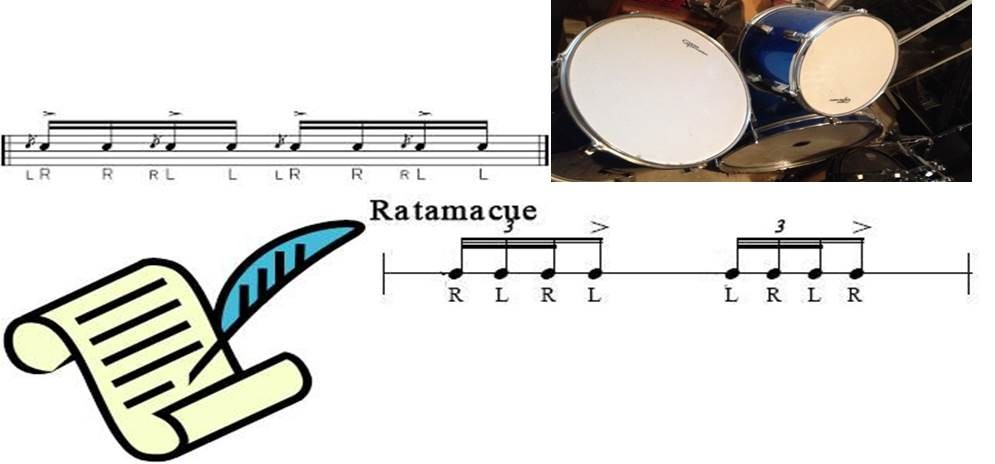
 Taps and Ratamacues