after you
draw the blinds
and shade your eyes
in elegance,
mirror my words,
and mouth them in a pallid
whisper with the dusk,
just before
the stars appear
in Lyra,
and the music
wiles.
after you
draw the blinds
and shade your eyes
in elegance,
mirror my words,
and mouth them in a pallid
whisper with the dusk,
just before
the stars appear
in Lyra,
and the music
wiles.
forever, relentless
late amid a lemniscate,
the space between the lines
ever rending – surrounded
by the never ending,
closed in a space
where moonlight
skews with sunbeam queues.
banners flying underneath
the breathing of the winds bequeath
a conquest perpetually given
and in few words, love’s recognition.
NaPoWriMo 2013 Day 29
It is the manner in which the drawbridge is lowered from the side of the castle wall, going from vertical to horizontal, that allows others entry into the inner courtyard. A rain barrel beneath the down spout to catch deluge runoff from the roof in April to use in May. The 3-2 breaking ball thrown in the sixth inning with runners on first and third, and two outs. A Bach bust figurine on the shelf facing out into the room, considering his thought of each note and the placement of same. The care in a resting hand on her knee while she smiles into the gray skies. A potted ivy plant on a glass table across the room from the window. A parting of the storm clouds filled by the waxing moon, visible from the castle tower.
NaPoWriMo 2013 Day 21.
Exact from me with whispers rapt and low,
the pace of conjugate contentious sway
into one another’s concert play.
The night reveals a space to deepen, slow
in the rush, the fierce becomes the calm.
Would that I could seal our lover’s sighs
grasping at the moon in starfilled skies,
interjecting sweet familiar psalms
and upon the hallowed, moistened ground,
love and passion fallow, for a time.
Yet the sounds of poesy and rhyme
call out to the blades gone pressing down
and the words that seem to fail in cue
wrap us in the dawn’s evolving dew.
NaPoWriMo 2013 Day 17
Slightly late, but hey, sonnets aren’t simple…
it is where
you look past
the moment,
and her form is
outlined against the wall,
larger than living,
but devoid of the details,
color and shade
integrated with vectors
that are her creations,
and hers alone.
***************
NaPoWriMo 2013 Day 7
Would that I could speak
beyond the gardens,
a language like bees;
a buzzing that lingers
among yellow flowers.
Sighing
over petals and stoma
and soaking
in a transpired grace,
-workmanlike-
thanking each place
for its guidance
with an innermost declaration.

A single tulip
leaned in and offered
a view of its heart
to one
who appreciates
brokenness.
See how the colors
-variegated on the outside-
congeal from mosaic to char
on the inside.
A cappella music (without instrumental accompaniment) is particularly enjoyable for me to listen to. As a poet (and an avocational musician), I am drawn to the similarities that poems and a cappella music have. Lyrical phrasing, meter, rhyming, and onomatopoeia mean so much to a cappella music, because it relies so heavily on the human vocal element.
*****************************
There are few things more lovely in nature than the calm surface of a body of water. The way a rowboat or canoe cuts through the still waters is direct, and appeals to one’s sight. The sounds of oars dipping into the surface and being pulled forward, leaves an echo. If there are no other sounds around, the setting is serene.
Louise Bogan (1897-1970) was a poet of the early/mid 20th century. She was born in Maine, into a family of mill workers. As a child, she was unfortunately witness to the adulterous affairs of her mother, which definitely shaped her views on love and betrayal, a common theme in her poetry. Most of her poetry was written early in her life. Later in life she worked as a poetry reviewer for the New Yorker. Bogan was fairly reclusive and reticent about sharing personal details of her life. Her poetic voice has a deep romantic resonance, and she manages to pull every bit of emotion out of minimal use of words. Among her works is a poem entitled “To be sung on the water”.
TO BE SUNG ON THE WATER
By Louise BoganBeautiful, my delight,
Pass, as we pass the wave.
Pass, as the mottled night
Leaves what it cannot save,
Scattering dark and bright.Beautiful, pass and be
Less than the guiltless shade
To which our vows were said;
Less than the sound of the oar
To which our vows were made, –
Less than the sound of its blade
Dipping the stream once more.
Samuel Barber (1910-1981) was a highly prolific American composer. While his best known work is arguably Adagio for Strings^, he also wrote vocal music and was highly acclaimed as a choral/vocal composer. He was an avid fan of poetry and composed works based on poems by Matthew Arnold, Percy Bysshe Shelley, and James Agee. In 1968, he composed a choral setting of Louise Bogan’s poem ” To be sung on the water.” There is no indication that Ms. Bogan ever heard a performance of this piece, but perhaps she would have nodded in agreement.
It is hauntingly beautiful.
^Adagio for Strings has been used in the soundtracks of The Elephant Man, Lorenzo’s Oil, and Platoon, as well as several other films.
They are widening streets in the suburbs,
and I’m thinking of Frost’s two roads,
-the ones that diverged-
while I’m driving past orange barrels
that line the road in the construction zone,
trying to avoid hazards.
And as I wind my way
through the pillared gauntlet
that warns of rough road
and unlevel pavement,
I see that the roadside up ahead
clears and gives way
to trees that climb toward heaven.
These trees invite me to continue
on past where I can see.
I wonder how that change happens,
and it just does.
******
Also, just because I like the song, the video, and the idea of vast unconnected machine that ends up somewhere, Here is OK Go.
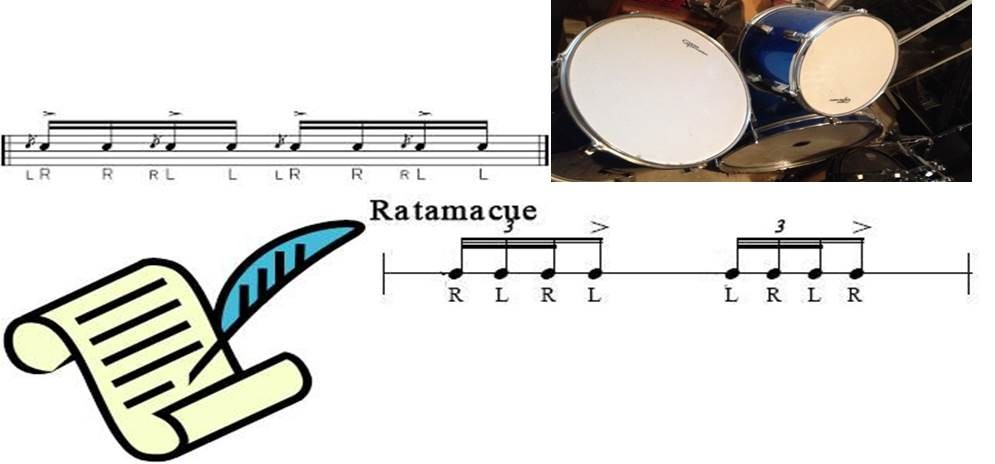
 Taps and Ratamacues