Category Archives: Uncategorized

Extracting meaning

Ain’t that the berries

was an expression my high school band director used when expressing excitement and surprise over something.

As he used it, this is an equivalent expression to:

Way Cool! and That’s the bees knees* and That’s great!.

Presumably, the origin of this saying has something to do with things being just as awesome as berries (which are pretty good – particularly in jams, pies, cobblers, and some simply by themselves). It is an interesting equivalency. And while the awesome culinary delights of berries are mostly undisputed (though some may have their favorites and not-so-favorite), there are other properties of berries that are quite unique and contribute to their awesomeness.

The extracts of berries contain flavonoids, phenolic acids, lignans and complex phenolic polymers (polymeric tannins). Among the flavonoids, the predominant group of anthocyanins give color to berry fruits (characteristically orange, red, or blue). These color compounds are interesting, because they can be used to study a variety of chemical interactions.

I find blueberries interesting because they are blue food. There are edible fruits that are green, yellow, orange or red, some purple…but this is the only naturally occurring blue food. In some of my recent reading**, I found an interesting research study on the potential use of blueberries for improvements in night vision. There have been numerous studies that claim this fact, but all have been subject to criticism for poor control studies. This recent report was inconclusive on the fact of improving night vision; however, it suggested a strong correlation between anthocyanin consumption and recovery after photobleaching (that moment when you step out of the dark into the blinding light, and you go.. Whoa! that’s bright!..and it takes you a moment to adjust.). The anthocyanins in blueberries may assist that recovery time.
stock-photo-blueberry-92682373

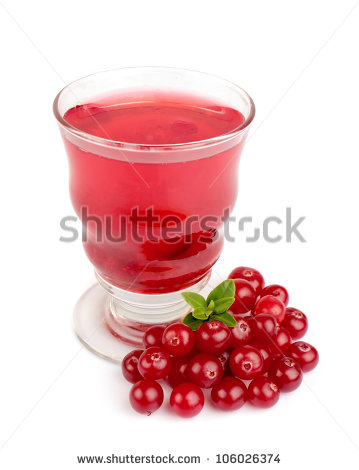
Another interesting berry fruit is cranberries. Like them or not, this staple of the Thanksgiving meal has also long been used as a folk remedy for urinary tract infections. In 2008, research*** was published that showed that cranberry juice cocktail inhibits the ability of E.coli bacteria (one of the common bacteria that causes UTI’s) from forming biofilms. This in turn makes it more likely that the bacteria can be flushed from your body.
stock-photo-glass-of-cranberry-juice-isolated-on-white-106026374

In raspberries, there is a diversity of antioxidant and anti-inflammatory phytonutrients unlike any other commonly consumed fruit****. Raspberries (both red and black) have been studied to determine their antioxidant content, and it has been suggested that raspberry ketone (rheosmin) increases metabolism in our fat cells, which has an impact on the management of obesity. Further, rheosmin can decrease activity of pancreatic lipase (a fat-digesting enzyme released by the pancreas), which may result in less digestion and absorption of fat. Another benefit is that by providing a rich supply of antioxidants and anti-inflammatory nutrients, raspberries can help lower risk of oxidative stress and excessive inflammation, reducing the potential for cancer cell formation.
stock-photo-raspberries-with-leaves-isolated-on-white-background-163382147
It is amazing that these small fruits pack so much punch in flavor and health benefits. So I suppose there is something to the expression –Ain’t that the berries.

===================================================

*Another curious expression that I’m not sure about.

**”Blueberry Effects on Dark Vision and Recovery after Photobleaching: Placebo-Controlled Crossover Studies” Journal of Agricultural & Food Chemistry 2014, 62 (46), pp 11180–11189

***New Biological Activities of Plant Proanthocyanidins,ACS Symposium Series Vol. 984, Chapter 7, Brandy J. Johnson, James B. Delehanty, Baochuan LinFrances S. Ligler, 2008, 101-114

****Anthocyanin content, antioxidant, anti-inflammatory and anticancer properties of blackberry and raspberry fruits. Journal of Food Composition and Analysis, Volume 23, Issue 6, September 2010, Pages 554-560.

order and chaos

I was on a quest last Sunday.

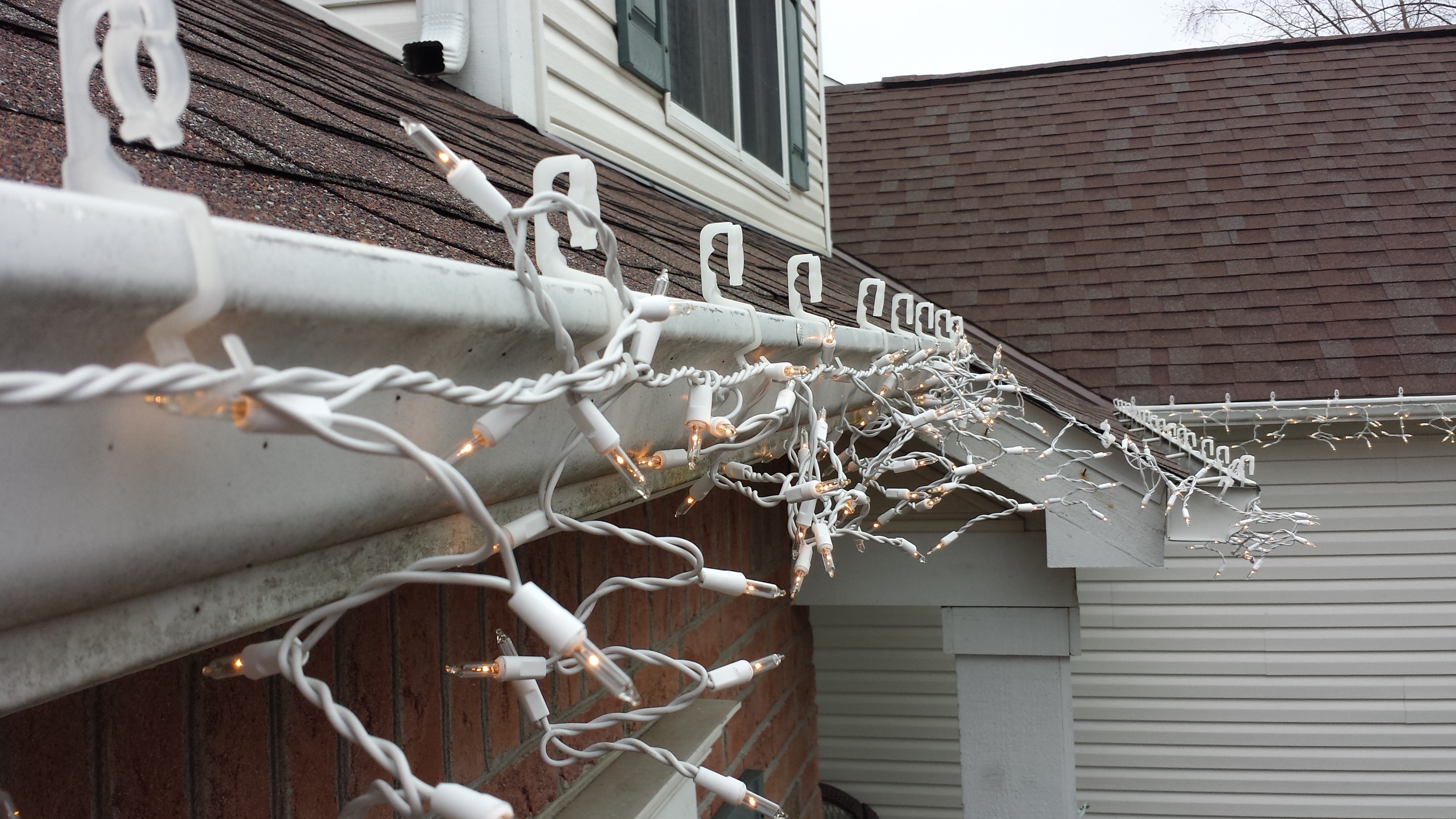
I had to seek out a new strand of white cord, clear light (not LEDs*), non-blinking icicle lights. This was because a) I had to replace a strand that I had tested prior to installing on the eaves of our humble abode (and it worked), yet after hanging them, one section of lights stopped working (arghh) and b) I was tired of troubleshooting this strand of lights with extra bulbs and fuses.

I was out running another errand when I got sucked into a newly built megastore (Oh..I’ll stop in there) – Like I had a bullseye on me or something.

First of all…it was as if the retail master had thrown all the quest ploys in my path. I entered the store, and had to decide to go straight ahead or turn left. I don’t know where the holiday section is here, but..just to the left, there is a token holiday light display, with the simple green string lights (white twinkling and multicolored variety), but no icicle lights. Surely there is more, I thought. I decided to turn left into the main thoroughfare and begin my descent into the labyrinth. I was met by all manners of shopping chaos, carts going across the aisle, people standing in the middle of the aisle talking…After weaving in and out of traffic, I hung a sharp right through the greeting cards and cut through the kitchen linens and was almost popped by a shopping cart rounding the corner. After exchanging apologies with the nice lady, I resumed my journey into the retail hell.

In the center of stores they like to place shelves that engulf you like some sort of canyon in which you lose your way, and by some fortunate circumstance find your way back. I moved to the left towards kitchenwares and tchotchkes so that I could get a better view of the landscape. I rounded the corner just in time to see the same lady that almost plowed me over in linens. We shared an uncomfortable smile and I quickly looked for a means of navigating out of there. Scanning the horizon, I saw red placards hanging from the ceiling. Further back in the store to my left, I saw one labeled HOLIDAY.

This was like some sort of heavenly sign – I swear I heard an angel choir.

They placed their entire holiday section in the back, the farthest corner from the entrance, with no indication of where it was. I moved toward the holiday zone with its bustling activity, and noticed the light displays on the back wall. Cautiously peeking around every corner, I walked through the prelit tree display and found myself among a huge throng of shoppers, the likes that I have never seen in one retail aisle.

The great equalizer in holiday decorating is that everyone uses lights, but everyone has different tastes in style of lights. Men, women, and children, young and old, wearing boots or slippers, fleece sweaters or jerseys, well made up or just woke up, all seeking quality holiday lighting.

On one 15 foot stretch of aisleway.

In the very back of the store.

I quickly scanned the available products and found icicle lights, but they were only available in green strand lights and that does not match our sense of decor. Green strand lights go in bushes and trees. White strand lights hang from eaves and windows.

Dejected from my lack of finding proper icicle lighting, I turned and began the walk out. To console myself I purchased a small strand of green lights on green strand (knowing that I needed an extra hundred lights for the final tree decoration in the front yard). Then, staying to the main aisles this time and moving slowly as to properly scan the intersections for oncoming traffic, I went to check out.

As I waited to pay, I pondered my trek through the maze and decided that even though I had not found what I wanted/needed, the excitement of the afternoon was exhilarating. I also purchased a diet green beverage to slake my thirst. I then thanked the cashier for her pleasantness and walked out of the store.

I found the icicle lights I needed later that night at a different store.

But it was all about the journey.

********************************
a great equalizer
funneled into the
cosmos
to seek
enlightenment,
where she wanders-
how she sulks
and saunters,
and nothing
can be
ventured without
the journey
in the maze.

lights.jpg

*Lest you chastise me for not choosing energy efficient LEDs, in my opinion they are cost prohibitive (in the retail sense), and only available in small strand lengths.

Density crawled

draping
the boughs of
a wintered tree

accrued
and angel-cared,
one two three,

yet subtraction
agreed,
with a
disappearance
forseen –

the implosion grown
abridged,
dripping

and small.

*********************
one of those little verse items that creep into your brain and don’t let go until you formulate a poem.

A cappella Friday: Bars and Feathers

em>Acappella music (without instrumental accompaniment) is particularly enjoyable for me to listen to. As a poet (and an avocational musician), I am drawn to the similarities that poems and acappella music have. Lyrical phrasing, meter, rhyming, assonance, and consonance mean so much to acappella music, because it relies so heavily on the human vocal element.

**********************************

It has been a while since I did one of these.

Partly because I hadn’t heard any new inspiring songs recently, neither was I particularly inspired to seek out any songs.

Until today.

I was wondering whether anyone had done an arrangement of Emily Dickinson poems for acappella chorus. Google. What a time waster saver. I found quite a few. And it should come as no surprise, as Ms. Dickinson is arguably the most prolific of American Poets and one of the more emotive poets (and also – to her credit – concise). These characteristics make her writing great fodder for choral literature.

The first one I noticed (and I think that I’ve sung it once) was Let down the Bars, O Death, composed by Samuel Barber, who was responsible for another haunting poem/choral selection that I discussed a while back, Louise Bogan’s To Be Sung on the Water. He wrote this piece during the same summer (1936)** as the string quartet that would eventually become Adagio for Strings.

Let down the Bars, O Death*
Emily Dickinson
Music by Samuel Barber

Let down the Bars, O Death —
The tired Flocks come in
Whose bleating ceases to repeat
Whose wandering is done —

Thine is the stillest night
Thine the securest Fold
Too near Thou art for seeking Thee
Too tender, to be told.

This setting is a simple chorale, with none of Barber’s usual complex counterpoint, but it is effective  at letting Dickinson’s text carry  the load.  Given her gift for emotionally charging phrases, it definitely works with his gift for musical conflict and resolution.  The opening of the piece sounds like a call, an invocation that begins hushed, and crescendos to the conclusion, where the opening lines are repeated/declared with emphasis.

The next piece was a bit of a surprise.  I have a soft spot for poetry that is light and hopeful (something that is not necessarily plentiful in Dickinson’s canon of writing), so when I happened upon “Hope” is the thing with feathers, I was hooked.

“Hope” is the thing with feathers*

Emily Dickinson
Music by Kenny Potter

“Hope” is the thing with feathers –
That perches in the soul –
And sings the tune without the words –
And never stops – at all –

And sweetest – in the Gale – is heard –
And sore must be the storm –
That could abash the little Bird
That kept so many warm –

I’ve heard it in the chillest land –
And on the strangest Sea –
Yet – never – in Extremity,
It asked a crumb – of me.

There are several different choral arrangements of this poem, but in my opinion, none of them capture the intention of the words like this arrangement by Dr. Kenny Potter of Wingate University. Recently composed in 2011***, this piece allows the underlying message to drive the song, with the opening lines carried through as heartbeat. A carefree melody, which breaks slightly to express the seriousness of the last line (much like Barber in the effective use of chorale style), but then returns to the patter of the “thing with feathers, and sings the tune without the words – and never stops – at all” fading to the end.

I believe he created an earworm.

The video I selected is a combined performance of several pieces. The first one is “Hope” is the thing with feathers. Have a listen. You will be humming this the next day.


*****************************************************************************************

*The Poems of Emily Dickinson Edited by R. W. Franklin (Harvard University Press, 1999)
**G. Schirmer, Octavo 8907
***Published by Santa Barbara Music Publishing (SB.SBMP-1017) 2011

A Passage

All of my most
compelling photographs
have roads in them:

The lonely stretch of highway
to the left of a bittersweet sunset.
after the leaves have
all blown away.

The S-curve in a raceway,
-empty-
then full of revving vehicles
vying for the sweet spot in the turns,
to accelerate into the straightaway
that continues out of view.

The picturesque motorway,
that aligns directly with
an imposing palisade of rock and ice,
only to veer sharply
and begin mounting the range,
passing through the crags
to some apex.

The city’s avenue at dusk after
a spring shower, streetlights
glow off the pavement,
and tail lights pierce the
somberness
as if to punctuate
my transitory presence
in a moment.

A reminder
that I was there and moved on.

Berlin1.jpg

that’s a lotta somethin’

Many years ago, I lived in the Crescent City.  

fleurdelis

This was in a time of relative innocence before Katrina, before the Saints were consistently good, before Casino gambling was legal, but ….it was not a time before there was good food.  I think there has ALWAYS been good food in New Orleans. It was probably written into the Louisiana Purchase agreement.  

You can’t swing a stick in that city without hitting a restaurant or sandwich shop or street vendor selling some delicacy…that is good to eat.

While living there, I discovered many unique foods: stale pastries with little plastic figurines in them are great party foods, street vendor hot dogs at 2 AM are THE BEST, oysters and crawfish taste better when you drink cheap local beers, coffee with chicory (tree bark) is best with cheap stale pastries or deep fried donuts with powdered sugar (beignets), crawfish etouffe’, po-boys are superior to subs, hoagies, or hero sandwiches,

and the muffuletta is a big-@$$ sandwich.

The moof-fa-what-Ah?

The muffuletta (moo-foo-let-ah) is a creation of the Italian community of New Orleans. The story goes that ca. 1906, Sicilian farmers selling produce at the Farmer’s Market would stop into the nearby Central Grocery for lunch. They would order ham, salami, cheese, olive salad, and bread, and then sit out on barrels or crates with everything spread out, eating everything separately (as is typical in Sicilian culture). The proprietor of Central Grocery (Signor Lupos Salvatore) suggested that they cut open the bread and prepare everything as a sandwich, and a new sandwich was born. The muffuletta is ubiquitous in New Orleans now, but there is a sign outside Central Grocery claiming the birthright. The name was derived from the bread roll used, which was determined to be better than french bread (already in high use for po-boy sandwiches) due to its soft interior and crunchy exterior. The typical muffuletta roll is a flat-ish bread disk that is about 10 inches in diameter. So it’s a huge sandwich. That is why it is typical for sandwich shops to sell 1/4 or 1/2 muffulettas.

Too much food you say?

There is a way to bring a little of that Noo Awlins food to your kitchen.

Single Muffuletta Sandwiches*

Ham, sliced (can be traditional Italian style ham (capicola), or something like Black Forest Ham. Use salty, cured hams, not sugar-cured or sweetened)
Salami, sliced
Provolone cheese, sliced
Mozzarella cheese, sliced
Marinated olive salad (Giardiniera or similar)**
Kaiser roll or similar bread

Cut the bread roll horizontally, and dress the bottom slice with the olive salad. Add the sliced ham, cheese and salami in alternating layers to the bottom bread roll and top with more cheese. Top the sandwich with more olive salad and the top piece of bread roll. You can prepare several sandwiches this way for a family, party or to save for later.

You may eat your muffuletta cold (as is traditional), or it can be toasted for 15 minutes or so (as shown below). Serve with some good ridged/ruffled potato chips.

20141005_130949[1]
*****************
*Disclaimer: This sandwich does not adhere to the strict ingredients of the muffuletta, but it is quite tasty and suitable for consumption.

**There are store brand giardiniera salad mixes that are quite good, or you can be adventurous and try to make your own. Someday, when I’m feeling more adventurous….