We all have our likes and dislikes, things that we migrate toward (or away from). When it’s something tangible that we really like, we like to have a memento of it. It is a part of who we are. When we see different forms of the same thing and get several tangible mementos, it becomes a collection. We go through life collecting things.
When I was young boy, I collected rocks, because I liked the different shapes and colors, smoothness and jaggedness. I always hoped that it would turn into an arrowhead collection, but those were difficult to come by. I also collected coins, because I liked the detail, the science and history of minting coins and medallions. Turns out, numismatics gets to be an expensive hobby, but I enjoyed the search for unusual currency and still enjoy coins today. As a teenager, I collected Beatles LPs and other records that I still own and have loaned to my sons so they could enjoy the crispness of vinyl recordings. I have a collection of poetry books that includes Frost, Heaney, ee cummings, and Bukowski, and I’m always on the look for new/old print poetry collections/chapterbooks, especially in second-stores and flea markets.
As an adult, some of my collections have happened by accident.
I have a nice collection of coffee mugs that I have accumulated over the years, mainly from perusing clearance shelves. Interestingly, it is the shape/design of the mugs that mostly appeal to me. Four of my coffee mugs are plain white china, but in different shapes with different handles. I do have a few “souvenir” mugs that are comprised of sorcerer’s apprentice Mickey, my writer’s mug (It is unwise to mock the poet), and my periodic table mug. It’s a good thing that I drink lots of coffee.
Sometimes there is a jump to other collections because of overlapping interests.
Recently a friend bought me a souvenir from his trip to Epcot: a set of coasters with Beatles album covers. A very cool and thoughtful gift – knowing my fanaticism for Beatles stuff. At Christmas, my sister gave me a gift of coasters as well: Four coasters with periodic table information of the radioactive elements U-238, Ra-226, Th-232, and Pu-244 on them. AND…when you set the glass on the coaster, they light up in the spectrum color of the actual element. Available from ThinkGeek here.
I don’t drink much, and we don’t entertain all that much either, but these coasters are WAY cool. I am now collecting cool coaster sets.
Cool mugs and Coasters
What do you do when you are no longer interested in your collection?
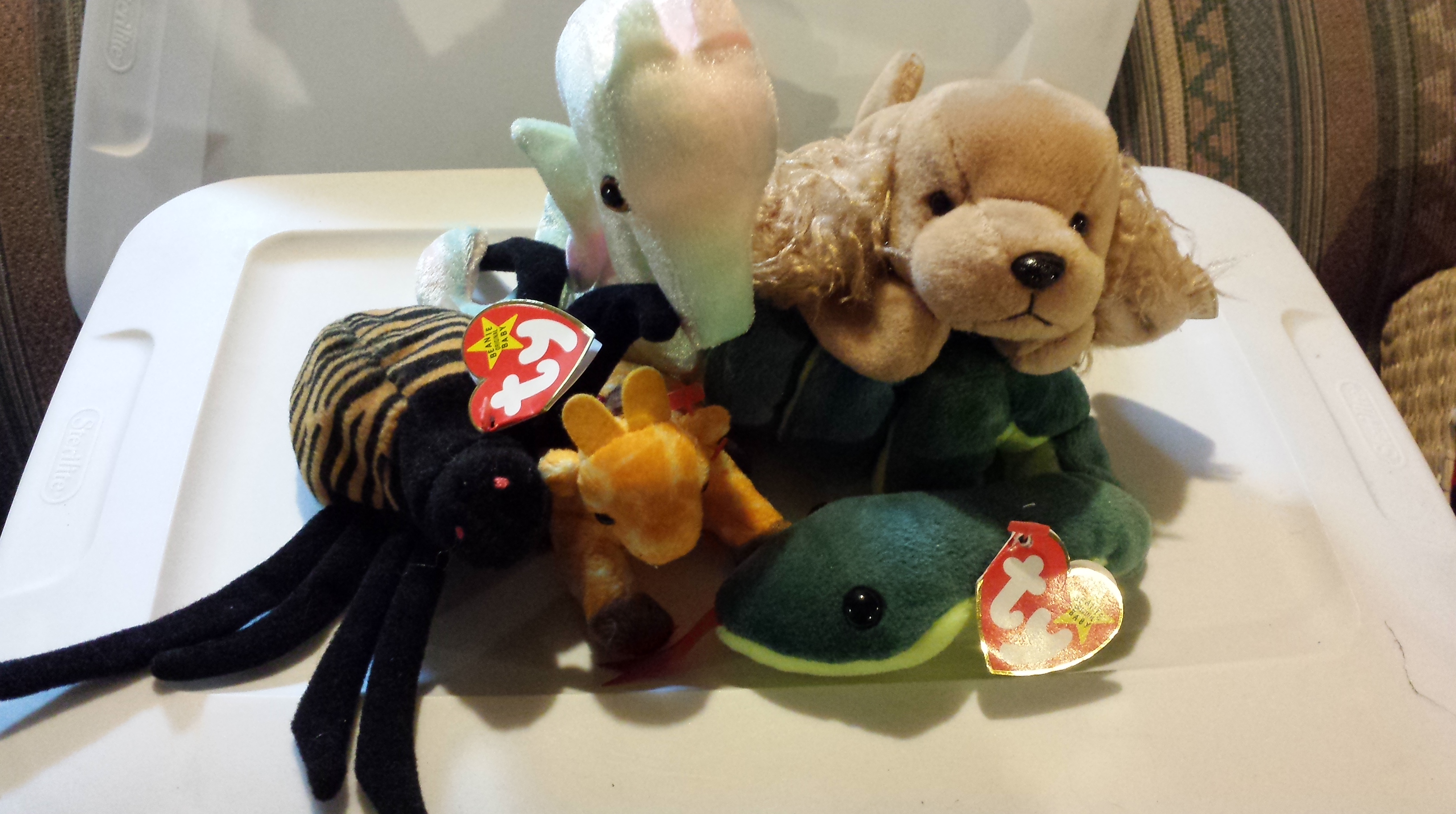
I am currently involved in a home project of reducing our stored clutter. Among the Christmas decorations, old pictures, and various memorabilia that we have stored is my wife’s collection of Beanie Babies. She collected these when they were all the rage in the 90’s. We have several bins, with some of them in little acrylic cases. My wife has agreed that she is no longer interested in them, and that I can remove them from our house…the question is…where?
Are there any collectors out there willing to give me a few dollars for all of them (probably 100-150 of them still with tags on them – make me an offer*)?
Are there any worthy organizations that would accept a donation of small plush adorable creatures?
Won’t someone take us home…please?
What do you collect? How have your collectible interests changed or evolved? Do you want any Beanie Babies?
*****************************************
*And if you are serious, email me and I can go through and catalogue what we have.
Lyrical phrasing, meter, rhyming, consonance, assonance, timbre, and tone mean so much to both choral music and poetry. Perhaps that is why, when good poetry is combined with a beautiful musical foundation, the result can be an emotional and spiritual adjuvant. It soothes the soul. There is no doubt that there is music in poetry/poetry in music.
********************
Once again I have been affected by a poem/choral arrangement that is not a cappella. Thus, I have renamed this feature Music in Poetry.
James Agee (1909-1955) was born in Knoxville, TN. His father died when James was only six, and his mother sent James and his younger sister to boarding schools. He was educated in Episcopal Boys Schools, ultimately graduating from Harvard in 1932. He worked as a freelance writer for most of his short life. He was a journalist, novelist, film critic, and screenwriter. He was a well-respected film critic in the 1940s and wrote screenplays for The African Queen (1951) and The Night of the Hunter (1955). His book, Let Us Now Praise Famous Men (1941) detailed the conditions of sharecropper families in the Depression era Deep South. Agee was also a poet. He published one volume of poetry in 1934, entitled Permit me Voyage, which contained the poem Sure on this Shining Night.
Sure on this shining night*
by James Agee
Sure on this shining night
Of star made shadows round,
Kindness must watch for me
This side the ground.
The late year lies down the north.
All is healed, all is health.
High summer holds the earth.
Hearts all whole.
Sure on this shining night I weep for wonder wand’ring far
alone
Of shadows on the stars.
*from Permit me Voyage published 1934 by Yale University
The poem itself is simple and hopeful. There is no doubt that Agee’s religious upbringing and education had instilled a faith in him, yet a loneliness pervades this poem. Perhaps due to the loss of his father at an early age and being sent to boarding schools away from family, the middle four lines
The late year lies down the north.
All is healed, all is health.
High summer holds the earth.
Hearts all whole.
indicate times when things are good, implying the typical holiday and family times of the year in the late year and the high summer. It is interesting use of the phrasing “all is healed, all is health” which follows the phrasing of the Christmas carol Silent Night, and has as it’s message, heavenly peace.
Other times are spent wandering and wondering, hopeful for Kindness to watch over him.
It is a strong emotional poem and is made musical on its own merit, through consonance with repeating sh-, sure and shining, l- late and lies, and h- healed, health, hearts, and whole. Lyrically, all very pleasing and comforting sounds.
In 1938 Samuel Barber wrote a musical setting of Sure on this shining night as a vocal solo (and later as a choral setting). The piano accompaniment evokes some of the emotional loneliness, and the solo performance by Cheryl Studer (soprano) captures the ache of lonely wonder/wander -ing. I like Barber’s choral arrangement (and have sung it), but this solo art song version is very beautifully done.
Sure on this shining night, music by Samuel Barber, published by G. Schirmer, Inc.
Rather than link to Barber’s choral arrangement, I found a different version of the song written in 2005 with music by Morten Lauridsen, a contemporary American composer. Lauridsen manages to bring the contemplative nature of the poem out in a subdued melody line that just seems to breath a life of its own. The performance by the Vox Humana Choral Ensemble is stunning.
Sure on this shining night, music by Morten Lauridsen, published by Peermusic Classical.
Both versions of the song do credit to James Agee’s poem.
They hold a lot of picturesque beauty. Whether it’s a mountain range, a sunset on the plains, the moon rising over a cityscape, a thunderstorm over the ocean…you get the picture. And that’s it, isn’t it? The picture – the still life of what is most beautiful in our day or on our journey, the horizon is a promise of something good. We wonder what is there, and how long it will take us to arrive.
I went for a walk one afternoon this past week. The weather was reasonable (for January) and I felt a bit of cabin fever, so I set out on a quick walk on the bike path that weaves through our township. I noticed as I was walking, that my head was always down, looking at the ground just ahead of my step. This was out of necessity, as the winter condition of the path is not good – it’s muddy, and there is a lot of goose poop. We are on the migratory pattern of a multigenerational gaggle and they make a huge mess along the common areas in my neighborhood. Anyway – with my head down- I couldn’t really tell where I was going, I was only focused on where my next step would fall. I trusted that I knew where I was going and I would end up back at my house. But the truth is, if I never looked at the horizon to get a bearing on where I was, or where I was going, I could have ended up in Pennsylvania (it might have taken 2 or 3 days, and I would be incredibly stubborn for not ever getting a reality check on my location).
There is something of a life lesson in this. While going through our daily routine, we tend to focus on the details and tasks – the places where our feet fall to avoid the goose turds and the mud puddles. If we never look up to see a horizon – to view where we want to go and give vision to a dream- some day we’ll stop and look around and realize we have no idea how we got to where we are. There is no memory of places along the way, only memories of steps and missteps, avoiding puddles, and hopping over fresh goose-shit.
I am vowing to look up more at the horizon and to enjoy the view. I might end up with a little more mud on my shoes, but the view will be worth it.
Do you stop to look at the horizon, or are you always trying to avoid the goose-poop?
Writing
I mentioned a while back that I had submitted a poem that was accepted for an online publication. It is posted here, in The Front Porch Review, or at the link Periodicity under Published Work, down at the lower right of the menu bar. I am fond of this poem, as it captures some actual experiences of my life, and rolls some of the meaning into life’s cyclic nature. There are some other excellent poems in that issue, I invite you to give it a read. As always, I welcome your comments and thoughts.
I’ve started off the new year writing (attempting to write) some flash fiction pieces. I may share something here soon, but I’m also contemplating moving/reorganizing my blog site to accommodate things differently.
Music
After bingeing on holiday/Christmas music since mid-November, I have been cleansing my musical palette with “oldies.” That’s such a relative term, isn’t it? One generation’s oldies are not the next. When I say oldies, I mean 50’s and 60’s jukebox tunes. Doo-wop and British invasion songs are peppy enough to gloss over the general ‘suckiness’ of January weather. I don’t mind the snow…but the bitter cold. What do you listen to on a winter day?
Some random statistics
Since my unemployment began, I’ve applied for approximately 125 positions, mostly through internet application processes. I’ve gone through 12 phone interview processes (with different companies) resulting in 1 onsite interview. That means almost a 10 % conversion from application to phone interview, and only about 8 % of those result in a site interview. This gives a whopping 0.8% likelihood of a job interview based on internet applications – I think. This is biased due to my specific area of expertise and experience level, but it demonstrates the level of difficulty in finding the right job. Sorry about the math…I have to keep my skills up.
Reading
I wish I could say that I did a lot of reading over the last part of 2014 and the Christmas holiday…but I didn’t. I’m still nursing Philip Kerr’s novel Dark Matter:The Private Life of Sir Isaac Newton– A Holmes-esque mystery novel during the time when Newton was Warden of the Royal Mint. I’ve read some interesting journal articles about anthocyanins that I mentioned in a post a while ago in December. And, my MIL gave me three Jack Higgins novels to read…which I am excited about. I read The Eagle has Landed when I was in high school and really liked it. Also, I dusted off my copy of The Silmarillion (after seeing the third and final Hobbit film), and leisurely read a few sections to try and jump start my interest in the book…sigh…the names.
It was a year of very large statistical variances…very high highs and very low lows. In retrospect, I recognize it as a phenomenal year of change. Change is never easy, particularly when thrust upon you unexpected…unplanned. But you manage it, take the opportunity life gives you and move on.
Eventually, things even out. It is important to remember that life happens to other people as well. And the recognition and ability to help each other out in times of crisis is what makes our human existence different from other creatures.
I encourage each and every one of you to do something to help someone in 2015.
At the beginning of 2014, I posted a resolution post with three goals for the year about writing.
I think I achieved two of them. I did attend a local writing conference and had a blast. I will do that again, and will seek other opportunities to improve. I wrote a lot this year (even without participating in NaPoWriMo in April) and ventured beyond poetry for much of it. I did seem to devote several posts to tomatoes…but it was a banner year in my continuing efforts to grow good tomatoes. They tasted good too. I made numerous batches of salsa, tomato sauce, fried green tomatoes, and a season ending green tomato salsa, which was such a hit, that my plans to freeze most of it and save it for winter months was squashed. It was gone after 2 weeks.
I traveled this year. In May, my father, my eldest son, and I traveled to Germany for a bus tour of the country. It was a GREAT trip. It is worthy of several posts on its own, but I just haven’t plowed back into my journal and pictures to write posts on that. A recent blogging exchange about Johann Sebastian Bach reminded me of the trip and I thought I would share this.
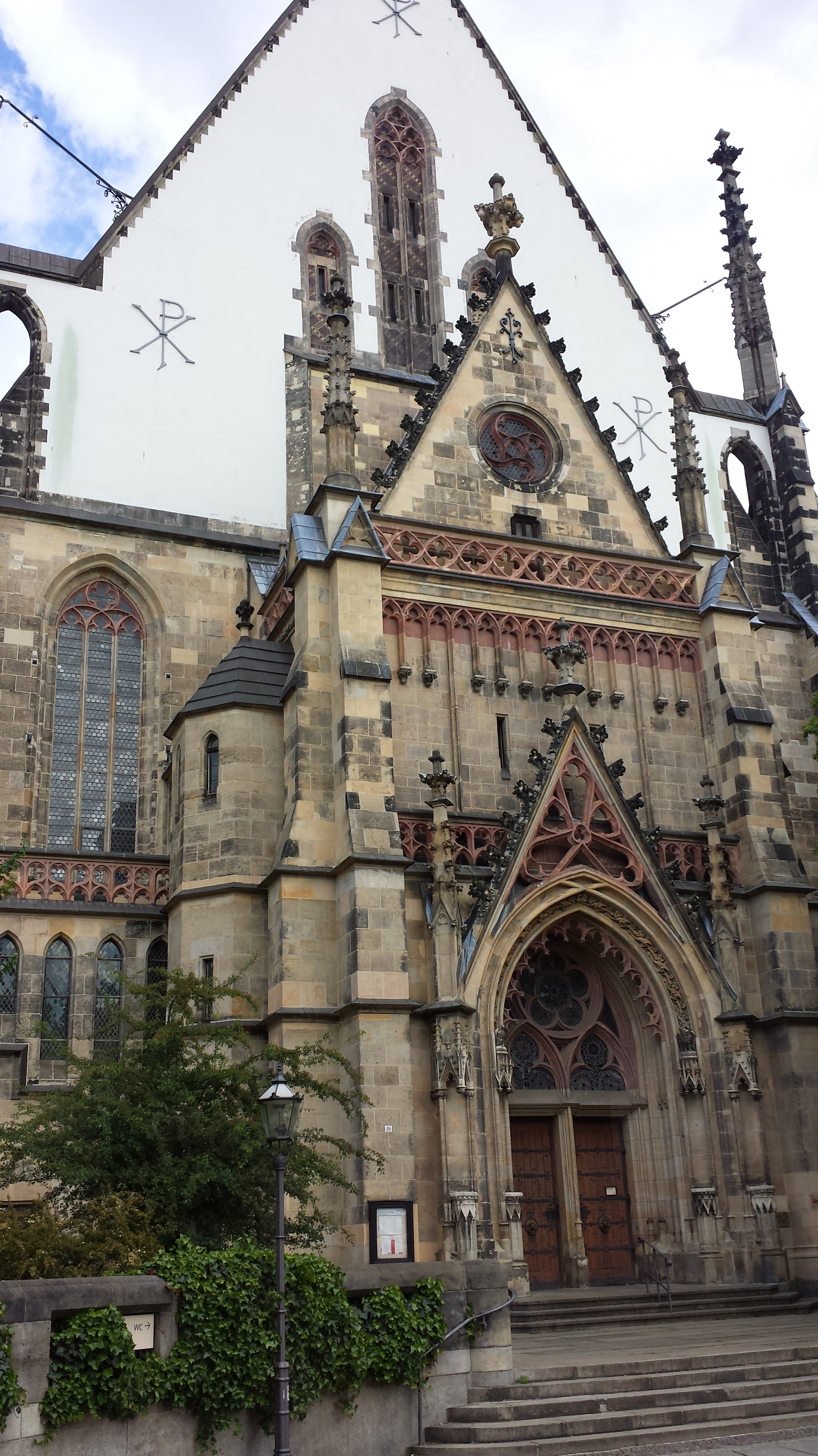
On our trip, we had numerous stops and very short (or at least in my opinion…short) durations to see the sights. One of these stopovers was in Leipzig. We had two hours to see sights in the old town, shop, snack, etc. The bus stopped in front of St. Thomas Church, where JS Bach served as cantor.
St. Thomas Church, Leipzig
Bach’s tomb is prominently placed in the front chancel area behind an iron gate.
JS Bach Tomb, St Thomas Church, Leipzig
During our short time there, we were fortunate to listen to a choir rehearse from the choir loft. And in no time, 2 hours was gone (I have tried to upload the short video I made of a portion of this, but WordPress does not like my video).
Here is a view of the altar, past where Bach’s tomb is located.
The altar inside St. Thomas Church, Leipzig
Germany was definitely a highlight of 2014, lots of good food, fellowship, mountains, and castles, and I will strive to post more of our travels in 2015.
Later in the year, after such a peak experience, there came an incredible low. I was released from my job. A bitter pill, but I am better off mentally and physically. I’m still looking for full-time work, and am hopeful that 2015 will bring not just a job, but the RIGHT job.
So what does 2015 have in store. I don’t know…but I am setting up for a really great year. I will continue writing, and if 2014 has taught me anything, it is to be willing to go into the unknown. So my writing may be somewhat different this year. I may try my hand at short stories. I also want to go to another writer’s conference or perhaps a workshop.
And to all of you out there, Happy New Year, and I wish you all the best in 2015. May you experience all the joy and success you can hold.
A darkness dwells, just out of sight,
among these brilliant, twinkling lights
and through the house all decked with green
a shadow stalks the verdant scene-
A dimness to the Advent host
pursuing room-to-room to boast
a victory not fought or won,
yet hides in fear, a braggart shunned.
And words of cheer and light revealed
keep gloominess at bay, concealed.
Joyeux Noel thus shared among
us brings to darkness- light- along.
So sing we all in towns and homes
a Christmas song in merry tones,
persuading those from shadows dim
to brilliant light and life with Him.
*********************
Writing a Christmas poem is difficult because the themes are so familiar. The difference between light and dark has been on my mind lately, and it seemed a fitting Christmas thought. My hope is to continue writing in 2015, and that you will continue to read.
I attached a clip below sharing Steven Curtis Chapman’s arrangement of O Come O Come Emmanuel, a text which resonates with this poem, but a different melody than typically associated with the song.
Best wishes this holiday season, Merry Christmas and a happy, prosperous new year.
There is a lot more in him than you guess, and a deal more than he has any idea of himself.
-Gandalf, speaking to the dwarves about his choice of Bilbo to be their burglar, in The Hobbit by J.R.R. Tolkien.
Today (December 17, 2014) marks the release of the third and final movie installment of The Hobbit, directed by Peter Jackson, and perhaps our last film adaptation of Tolkien’s Middle Earth, unless someone tries to unravel The Silmarillion or tries to flesh out any number of short stories. I plan to see the movie (not today, or even this week -probably), because this story is such an important part of my literary life. I read The Hobbit for the first time as a 14 year old, then moved on to the LOTR Trilogy. I recently read it again (a couple of years ago, prior to the film releases), and was still amazed by its light-heartedness compared to the later trilogy – though the films are trying to invoke that more brooding environment.
My enjoyment of The Hobbit has always centered around Bilbo Baggins. He was written as such a likeable character and an everyman that readers (and I think, especially adolescents) could relate to. He wasn’t adventurous and had never sought out grand change – yet, he had the internal bravery to go beyond his comfort zone when faced with the choice. He wasn’t thought of as much of a warrior or a contributor to the dwarves group. He was very much an outsider, culturally and personality-wise. He didn’t fit their idea.
Bilbo Baggins, as depicted in the Rankin/Bass film production of The Hobbit (1977)
Yet Gandalf knew…and took a chance.
Either he knew something of Bilbo’s ancestry (as Tolkien suggests some of Bilbo’s ancestors were more adventurous hobbits – which made them something of a novelty to the culture) or he recognized something in Bilbo’s personality that made him appealing in the role of burglar.
Perhaps, it is because he was so small.
Perhaps, it was because he was so self-effacing.
Perhaps, it was because hobbits are generally resilient and self-preserving, yet light hearted.
Whatever the reason, Bilbo ultimately proves his worth to the group and grows in confidence by saving them from various situations until the dwarves accept him. He returns to his home at Bag-End a wiser, more confident hobbit.
And while he was also the fortunate finder of a ring of power and being literally invisible is much more useful than just being ignored, the ability of people to achieve things under unusual circumstances should never be underestimated. Certainly Bilbo had to prove himself, but he also was put in circumstances where he had to do something. He chose to help out Thorin and Company. His self-preservation didn’t win out. This is seen later in other hobbits in the trilogy: Frodo, Sam, Merry and Pippin all faced challenges and stepped in to do something.
That is the redeeming part of Tolkien’s Middle Earth Saga, that hobbits and other creatures (Ents?) viewed as unimportant tipped the balance and achieved great things.
you held close
your gathered words-
berries ripening in the basket
leaves, before falling,
turned from green
to yellow
or red.
the wind blew around,
whisking between the
clattering branches
before a whisper
of snowfall.
an ascendant path
obscured ahead,
reveals much
upon arrival.
There-
Look at how
you make me wait
for you.
*************
A poem about transitions and how things change on/in a moment. Something that is prominently in my thoughts these days. The “and then” moment. Sometimes grand in scope, sometimes merely just a moment. But the ‘and then’ always tilts the balance.
was an expression my high school band director used when expressing excitement and surprise over something.
As he used it, this is an equivalent expression to:
Way Cool! and That’s the bees knees* and That’s great!.
Presumably, the origin of this saying has something to do with things being just as awesome as berries (which are pretty good – particularly in jams, pies, cobblers, and some simply by themselves). It is an interesting equivalency. And while the awesome culinary delights of berries are mostly undisputed (though some may have their favorites and not-so-favorite), there are other properties of berries that are quite unique and contribute to their awesomeness.
The extracts of berries contain flavonoids, phenolic acids, lignans and complex phenolic polymers (polymeric tannins). Among the flavonoids, the predominant group of anthocyanins give color to berry fruits (characteristically orange, red, or blue). These color compounds are interesting, because they can be used to study a variety of chemical interactions.
I find blueberries interesting because they are blue food. There are edible fruits that are green, yellow, orange or red, some purple…but this is the only naturally occurring blue food. In some of my recent reading**, I found an interesting research study on the potential use of blueberries for improvements in night vision. There have been numerous studies that claim this fact, but all have been subject to criticism for poor control studies. This recent report was inconclusive on the fact of improving night vision; however, it suggested a strong correlation between anthocyanin consumption and recovery after photobleaching (that moment when you step out of the dark into the blinding light, and you go.. Whoa! that’s bright!..and it takes you a moment to adjust.). The anthocyanins in blueberries may assist that recovery time.
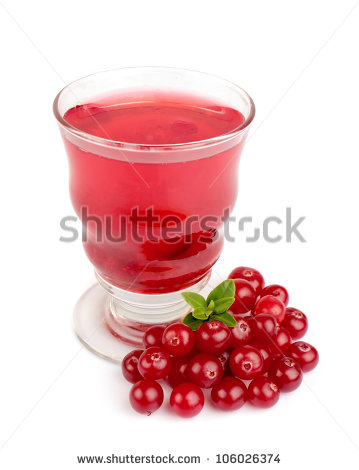
Another interesting berry fruit is cranberries. Like them or not, this staple of the Thanksgiving meal has also long been used as a folk remedy for urinary tract infections. In 2008, research*** was published that showed that cranberry juice cocktail inhibits the ability of E.coli bacteria (one of the common bacteria that causes UTI’s) from forming biofilms. This in turn makes it more likely that the bacteria can be flushed from your body.
In raspberries, there is a diversity of antioxidant and anti-inflammatory phytonutrients unlike any other commonly consumed fruit****. Raspberries (both red and black) have been studied to determine their antioxidant content, and it has been suggested that raspberry ketone (rheosmin) increases metabolism in our fat cells, which has an impact on the management of obesity. Further, rheosmin can decrease activity of pancreatic lipase (a fat-digesting enzyme released by the pancreas), which may result in less digestion and absorption of fat. Another benefit is that by providing a rich supply of antioxidants and anti-inflammatory nutrients, raspberries can help lower risk of oxidative stress and excessive inflammation, reducing the potential for cancer cell formation.
It is amazing that these small fruits pack so much punch in flavor and health benefits. So I suppose there is something to the expression –Ain’t that the berries.
*Another curious expression that I’m not sure about.
**”Blueberry Effects on Dark Vision and Recovery after Photobleaching: Placebo-Controlled Crossover Studies” Journal of Agricultural & Food Chemistry 2014, 62 (46), pp 11180–11189
***New Biological Activities of Plant Proanthocyanidins,ACS Symposium Series Vol. 984, Chapter 7, Brandy J. Johnson, James B. Delehanty, Baochuan LinFrances S. Ligler, 2008, 101-114
****Anthocyanin content, antioxidant, anti-inflammatory and anticancer properties of blackberry and raspberry fruits. Journal of Food Composition and Analysis, Volume 23, Issue 6, September 2010, Pages 554-560.





 Taps and Ratamacues