To write of writing seems so trite
and through this morning all alight,
composing and constructing rime
I seemed to focus all my time
on something sonorous and sleek
and this I cared to form and tweak.
Yet, I could not stay the sounds,
the ones that crack, the ones that round,
the ones that exhale in the wind,
the ones that rest and feed and sin.
I could not break them -though so eager-
then left for you, my reckless reader-
Something in the writing here
with devotion to the ear,
in the hopes that when you read
the music, timbre’d whole will cede
and capture from its hiding place
a flush – a sweltering embrace.
in truth,
held between the point
and paper,
-all writing is captive.
No matter
its color in light
or softness of skin,
whether veiled by chiffon or lace
or by shadows covering your face,
this bathes and penetrates
the pages in.
And here I, the author,
have placed myself
on this adjoining space-
and if desired and allowed,
(if nothing else be true)
I’ll awaken in some verse
absorbed in text
or presuming scrawl,
in a moment
next to you.
when the door is closed
she cries silent tears
and mines her thoughts-composed
her distress disappears
into a verse she knows by heart
and sings her soul to stir
a theme, a song the poet starts
to sketch- conveys the world to her.
such things should be in books to share
and on the page inspired
with predecessor’s ink and air
once weighted and admired.
Though now, poetic thoughts disperse
on ether, winds unbound
and beauty finds a home inversed
not on pages, written down.
and when she’s in her room, confined-
her echos and her action sings
minding thoughts-composed and rhymed
for that day and these modest things.
**********************
I read news every day about poetry being on the wane, about publications being discontinued, about fewer opportunities for poetry to be in the mainstream…it is sad, but poetry is a language that can’t be killed. It breaths life into itself. It’s subversive. It is ethereal. It constantly changes. It renews itself and us in the process. If it ever reaches the point where poetry is not printed (and I hope it never does!), it will exist on the scrap papers, napkins, brick walls and memories/minds of its practitioners.
Lyrical phrasing, meter, rhyming, consonance, assonance, timbre, and tone mean so much to both choral music and poetry. Perhaps that is why, when good poetry is combined with a beautiful musical foundation, the result can be an emotional and spiritual adjuvant. It soothes the soul. There is no doubt that there is music in poetry/poetry in music.
********************
Once again I have been affected by a poem/choral arrangement that is not a cappella. Thus, I have renamed this feature Music in Poetry.
James Agee (1909-1955) was born in Knoxville, TN. His father died when James was only six, and his mother sent James and his younger sister to boarding schools. He was educated in Episcopal Boys Schools, ultimately graduating from Harvard in 1932. He worked as a freelance writer for most of his short life. He was a journalist, novelist, film critic, and screenwriter. He was a well-respected film critic in the 1940s and wrote screenplays for The African Queen (1951) and The Night of the Hunter (1955). His book, Let Us Now Praise Famous Men (1941) detailed the conditions of sharecropper families in the Depression era Deep South. Agee was also a poet. He published one volume of poetry in 1934, entitled Permit me Voyage, which contained the poem Sure on this Shining Night.
Sure on this shining night*
by James Agee
Sure on this shining night
Of star made shadows round,
Kindness must watch for me
This side the ground.
The late year lies down the north.
All is healed, all is health.
High summer holds the earth.
Hearts all whole.
Sure on this shining night I weep for wonder wand’ring far
alone
Of shadows on the stars.
*from Permit me Voyage published 1934 by Yale University
The poem itself is simple and hopeful. There is no doubt that Agee’s religious upbringing and education had instilled a faith in him, yet a loneliness pervades this poem. Perhaps due to the loss of his father at an early age and being sent to boarding schools away from family, the middle four lines
The late year lies down the north.
All is healed, all is health.
High summer holds the earth.
Hearts all whole.
indicate times when things are good, implying the typical holiday and family times of the year in the late year and the high summer. It is interesting use of the phrasing “all is healed, all is health” which follows the phrasing of the Christmas carol Silent Night, and has as it’s message, heavenly peace.
Other times are spent wandering and wondering, hopeful for Kindness to watch over him.
It is a strong emotional poem and is made musical on its own merit, through consonance with repeating sh-, sure and shining, l- late and lies, and h- healed, health, hearts, and whole. Lyrically, all very pleasing and comforting sounds.
In 1938 Samuel Barber wrote a musical setting of Sure on this shining night as a vocal solo (and later as a choral setting). The piano accompaniment evokes some of the emotional loneliness, and the solo performance by Cheryl Studer (soprano) captures the ache of lonely wonder/wander -ing. I like Barber’s choral arrangement (and have sung it), but this solo art song version is very beautifully done.
Sure on this shining night, music by Samuel Barber, published by G. Schirmer, Inc.
Rather than link to Barber’s choral arrangement, I found a different version of the song written in 2005 with music by Morten Lauridsen, a contemporary American composer. Lauridsen manages to bring the contemplative nature of the poem out in a subdued melody line that just seems to breath a life of its own. The performance by the Vox Humana Choral Ensemble is stunning.
Sure on this shining night, music by Morten Lauridsen, published by Peermusic Classical.
Both versions of the song do credit to James Agee’s poem.
She wanted that life, she thought,
After wading in the water up and down the beach
Her feet embedding in the moving sand.
The allure of the ocean beyond pulled her further out
To that pale white line at the edge
Of the blue-green horizon,
Until there was no place to stand,
only piled surf
And depths of a world she could not comprehend.
With remnants of foam,
The continuing washes of the waves
Moved her ashore in the sand
like a child’s tantrum from anger to tears,
Bits of seaweed in her hair,
and a breathless sobbing
that no mother can placate.
Walking on the sand
he noticed that
erosion plains occur
every so often,
as run-off from heavy rains
strip away layers and sculpt
the low-lying landscape.
It is only a lake
and not a great ocean.
It is a place where rivers and creeks collide.
Behind a manmade wall,
where ancestral lands
and cemeteries were slowly drowned,
the living and the dead
were displaced with equal sluggishness.
The basin slowly filled
to cover first the grasses,
then underbrush and the trees.
He never felt the desire
to trample a sand castle,
except this once.
In that moment before grief
When you have a hold on something
-it could be anything-
maybe carrots,
or a sheet of paper,
or pencil.
You release your grip in an instant.
Time does not continue,
yet the object falls away.
Not like dropping a ball,
with a child’s anticipation of return.
Neither as with a moment of revelation,
or when gasps follow a feverish plea
for more.
It is different.
It is a moment we cannot predict,
unable to stage a photograph
of the way the touch vanishes
and grasp fails,
yet the burden of loss enfolds.
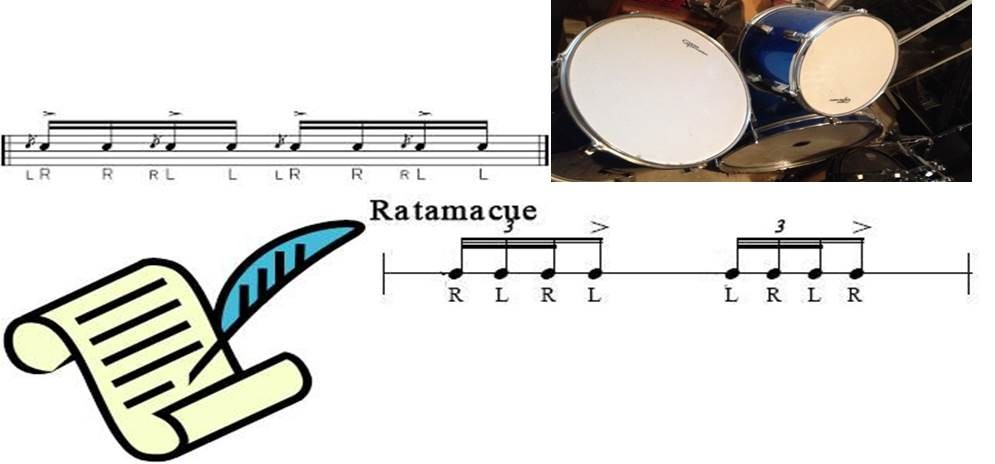

 Taps and Ratamacues