Stop and hear the hornpipe and jig
as the springtime rolls in, pushes away
winter’s white cloak.
It draws the living from their depth
to click heels – stomping the last
of the chill- pointing to summer’s thrill
as it leaps and bounces and reels.
**************
Something for the emergence of spring, also in keeping with the recent St. Patrick’s Day festivities.
Charlotte,
prickling leaves while
her reclining posture
whispers an invitation, told
of truth.
The wind
awaits her voice
that mocks despair, her tree
ruffles yet remains quiet, and
steadfast.
Damsel,
in blue gingham
by angel’s wings she sings –
broken, igniting fierceness,
she mends.
***********
Some observations about this poem. I’ve never personally known or physically met anyone named Charlotte. I follow a couple of blogs and have read several other blogs this week written by women named Charlotte. It’s coincidental, yet fascinating to me that so many Charlottes present their writing on blogs that I should read in one week. I love the sounds the name makes. It’s a name made to be whispered.
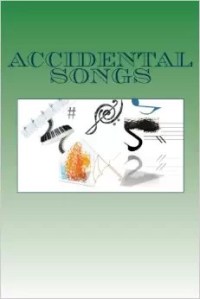
For a few months now, I’ve been been collecting and reviewing, editing and reviewing, fretting and stewing, anxiously awaiting reviewing. I’ve been putting together my first collection of poetry. It is a chapter book that is my first attempt at widespread publication, entitled Accidental Songs.
It was both exhilarating and frustrating. The selection process for poems in a collection lays bare all the insecurities that I had in writing them in the first place. I believe that some of them are great poems, some of them are not that great. Some had to be cut altogether, others were recut and reformed into something that fit the overall idea for the collection. But as the sum of the whole, I think they all contribute something to the collection, and that was what I wanted.
I want to thank Sarah Wesson and Sherry O’keefe for their time and valuable comments during the manuscript review.
And I want to thank my wife for being the incredible supportive spouse she is. Thanks babe.
Of course, I invite you to visit Amazon.com and have a look for yourself. I’m proud that I could accomplish this effort. If you should choose to purchase a copy, Thanks!
When I look into the snow, I watch a single flake fall. If I follow it,
the spiral trail echos until it disappears among its forebearers
and covers the dead grass.
The next one tracks a different route,
but it achieves the same goal
as its predecessor, and the next one, and the next…
If I lose focus and see only the field, the snowfall moves in groups.
The trailing falls away as it becomes something
more wracked and solitary.
I am immobile.
Later, I can see the ground where my dogs make paths.
They follow the same tracks they make in summer months
to investigate the smells of the borderlands.
In the snow, the paw prints map the trips to their favorite tree
and circle back the long way around. It outlines a crescent shape
that lays a shadow against the porch light.
My neighbor has a grove of pampas grass
that looks like a huddled mass of people paused –
making their way around his house against the force of a winter gale.
Lyrical phrasing, meter, rhyming, consonance, assonance, timbre, and tone mean so much to both choral music and poetry. Perhaps that is why, when good poetry is combined with a beautiful musical foundation, the result can be an emotional and spiritual adjuvant. It soothes the soul. There is no doubt that there is music in poetry/poetry in music.
********************
Once again I have been affected by a poem/choral arrangement that is not a cappella. Thus, I have renamed this feature Music in Poetry.
James Agee (1909-1955) was born in Knoxville, TN. His father died when James was only six, and his mother sent James and his younger sister to boarding schools. He was educated in Episcopal Boys Schools, ultimately graduating from Harvard in 1932. He worked as a freelance writer for most of his short life. He was a journalist, novelist, film critic, and screenwriter. He was a well-respected film critic in the 1940s and wrote screenplays for The African Queen (1951) and The Night of the Hunter (1955). His book, Let Us Now Praise Famous Men (1941) detailed the conditions of sharecropper families in the Depression era Deep South. Agee was also a poet. He published one volume of poetry in 1934, entitled Permit me Voyage, which contained the poem Sure on this Shining Night.
Sure on this shining night*
by James Agee
Sure on this shining night
Of star made shadows round,
Kindness must watch for me
This side the ground.
The late year lies down the north.
All is healed, all is health.
High summer holds the earth.
Hearts all whole.
Sure on this shining night I weep for wonder wand’ring far
alone
Of shadows on the stars.
*from Permit me Voyage published 1934 by Yale University
The poem itself is simple and hopeful. There is no doubt that Agee’s religious upbringing and education had instilled a faith in him, yet a loneliness pervades this poem. Perhaps due to the loss of his father at an early age and being sent to boarding schools away from family, the middle four lines
The late year lies down the north.
All is healed, all is health.
High summer holds the earth.
Hearts all whole.
indicate times when things are good, implying the typical holiday and family times of the year in the late year and the high summer. It is interesting use of the phrasing “all is healed, all is health” which follows the phrasing of the Christmas carol Silent Night, and has as it’s message, heavenly peace.
Other times are spent wandering and wondering, hopeful for Kindness to watch over him.
It is a strong emotional poem and is made musical on its own merit, through consonance with repeating sh-, sure and shining, l- late and lies, and h- healed, health, hearts, and whole. Lyrically, all very pleasing and comforting sounds.
In 1938 Samuel Barber wrote a musical setting of Sure on this shining night as a vocal solo (and later as a choral setting). The piano accompaniment evokes some of the emotional loneliness, and the solo performance by Cheryl Studer (soprano) captures the ache of lonely wonder/wander -ing. I like Barber’s choral arrangement (and have sung it), but this solo art song version is very beautifully done.
Sure on this shining night, music by Samuel Barber, published by G. Schirmer, Inc.
Rather than link to Barber’s choral arrangement, I found a different version of the song written in 2005 with music by Morten Lauridsen, a contemporary American composer. Lauridsen manages to bring the contemplative nature of the poem out in a subdued melody line that just seems to breath a life of its own. The performance by the Vox Humana Choral Ensemble is stunning.
Sure on this shining night, music by Morten Lauridsen, published by Peermusic Classical.
Both versions of the song do credit to James Agee’s poem.
A darkness dwells, just out of sight,
among these brilliant, twinkling lights
and through the house all decked with green
a shadow stalks the verdant scene-
A dimness to the Advent host
pursuing room-to-room to boast
a victory not fought or won,
yet hides in fear, a braggart shunned.
And words of cheer and light revealed
keep gloominess at bay, concealed.
Joyeux Noel thus shared among
us brings to darkness- light- along.
So sing we all in towns and homes
a Christmas song in merry tones,
persuading those from shadows dim
to brilliant light and life with Him.
*********************
Writing a Christmas poem is difficult because the themes are so familiar. The difference between light and dark has been on my mind lately, and it seemed a fitting Christmas thought. My hope is to continue writing in 2015, and that you will continue to read.
I attached a clip below sharing Steven Curtis Chapman’s arrangement of O Come O Come Emmanuel, a text which resonates with this poem, but a different melody than typically associated with the song.
Best wishes this holiday season, Merry Christmas and a happy, prosperous new year.
you held close
your gathered words-
berries ripening in the basket
leaves, before falling,
turned from green
to yellow
or red.
the wind blew around,
whisking between the
clattering branches
before a whisper
of snowfall.
an ascendant path
obscured ahead,
reveals much
upon arrival.
There-
Look at how
you make me wait
for you.
*************
A poem about transitions and how things change on/in a moment. Something that is prominently in my thoughts these days. The “and then” moment. Sometimes grand in scope, sometimes merely just a moment. But the ‘and then’ always tilts the balance.

 Taps and Ratamacues